You approved the sample, paid the deposit, and now you need to decide what kind of quality check is worth paying for. This is where buyers lose time and money by treating a factory audit and a product inspection as interchangeable. They aren’t.
In a factory audit vs product inspection decision, the real question is not which one is “better.” It is whether you need evidence about the supplier’s ability to run the process, or evidence about the specific goods already made.
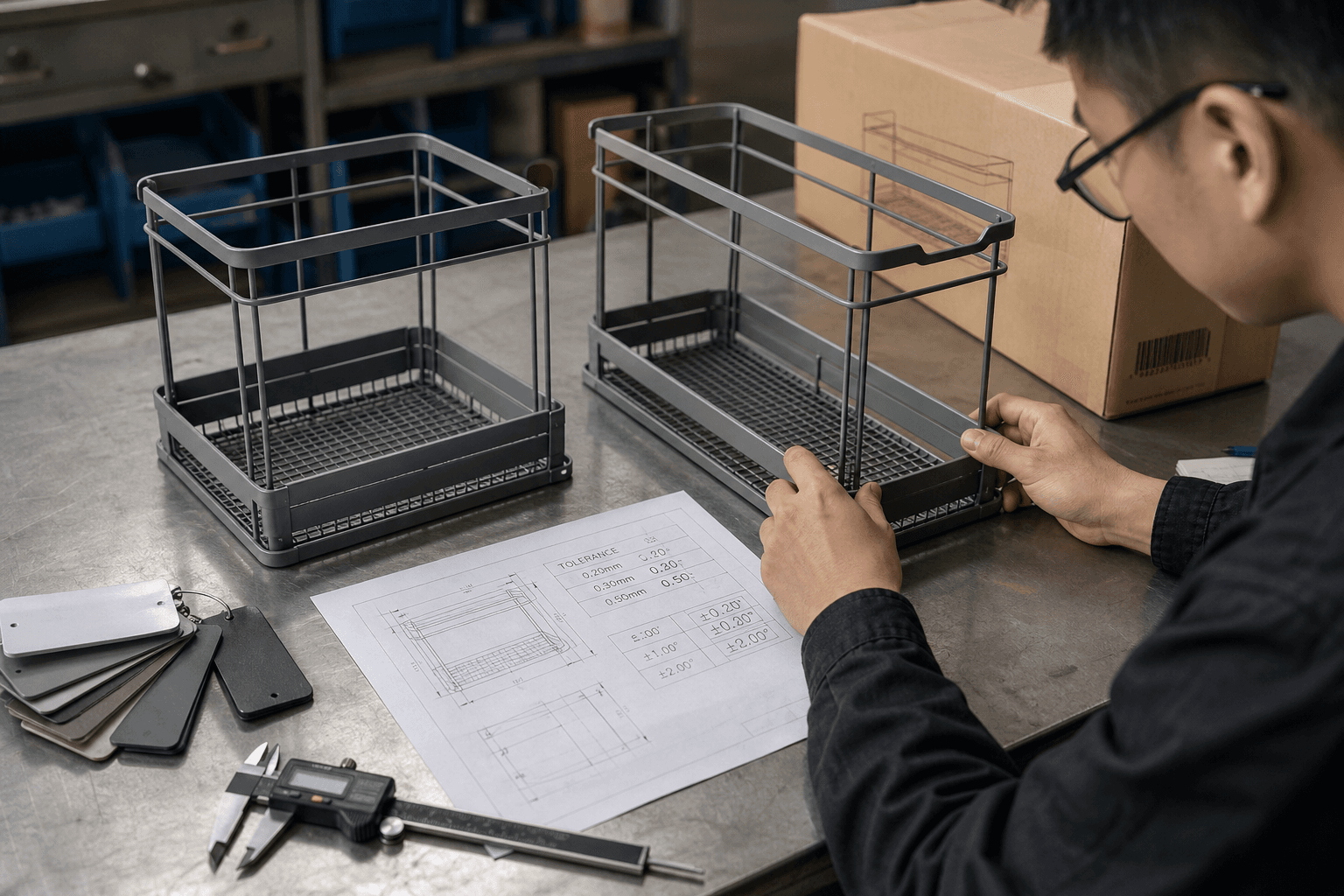
That difference is built into the methods. A factory audit is a review of the supplier’s management and production controls. ISO 19011 is guidance for auditing management systems, which is a useful clue: an audit examines the system around production, not the finished lot itself (ISO 19011 overview). A product inspection is usually a sampling-based check of in-process or finished goods against your agreed requirements. ASQ’s guidance on Z1.4 and acceptance sampling is explicit that these plans support lot acceptance decisions; they do not qualify a supplier or prove defect-free output (ASQ on Z1.4 and Z1.9, ASQ on acceptance sampling).
So the recommendation is straightforward. If you are deciding whether to trust a new factory with your product, start with an audit. If you are deciding whether this shipment should leave the factory, start with an inspection. If the order is high-risk, customized, regulated, or painful to rework after arrival, the sensible answer is often to sequence both.
Start by naming the decision you actually have
Buyers often ask for “quality control” when what they really need is one of two decisions.
The first is supplier approval. Can this factory control materials, records, packaging versions, operator instructions, and production flow well enough to repeat the approved sample at scale?
The second is shipment approval. Does this lot, as packed or nearly packed, meet the agreed standards closely enough to ship, rework, sort, or hold?
If you mix those up, you buy the wrong evidence. An audit will not tell you whether carton 83 contains the wrong insert card. An inspection will not tell you whether the supplier has weak revision control and will quietly use old packaging next month.
That is the tradeoff that changes the recommendation: repeatability risk versus lot risk. If the expensive failure is choosing a supplier that cannot run a controlled process, audit first. If the expensive failure is wiring final payment on a bad shipment, inspect first.
Read the video transcript
You’ve approved a sample and paid a deposit, but the real headache is choosing evidence that answers your actual risk before more money leaves your hands. A factory audit looks at how the supplier controls production, while a product inspection checks sampled goods already made. They differ because systems risk and shipment risk aren’t the same. If you’re choosing a new factory, process evidence matters more because repeatability can fail before cartons exist. If goods are finished, you need release evidence for this lot. Imagine two suppliers for a private-label kitchen tool. The cheaper one can’t show clear traceability or label control, so the higher quote may actually reduce expensive rework risk. After choosing the stronger supplier, an inspection helps decide whether that shipment should leave. Still, passing a sample-based check doesn’t prove every unit is perfect or future lots will match. Write the sentence you need answered this week: can this supplier run the process, or should this lot ship. That keeps quality spending practical instead of hopeful.
What a factory audit tells you, and what it does not
A factory audit is most useful before you commit more cash to a supplier relationship. It helps you judge whether the factory appears capable of producing your product in a controlled way.
In practical terms, the findings that matter are not abstract scores. They are things like whether incoming materials are checked, whether production records tie finished goods to dates and material lots, whether packaging and label revisions are controlled, whether key steps are subcontracted, and whether the factory’s actual setup suits your order size and complexity. ISO 19011 covers audit principles, audit program management, conducting audits, and auditor competence, but it is still guidance for auditing systems rather than proof of product conformity (ISO 19011 scope).
That limit matters. A clean audit can still be followed by a poor shipment because audits are point-in-time reviews of systems and records. Operators still have to follow the process on your production dates. Materials still have to match what was approved. Reality remains rude.
Still, if you are vetting a new supplier, an audit often gives you the earlier and cheaper warning. Problems found before a purchase order are sourcing problems. The same problems found after production become inventory problems.
What a product inspection tells you, and what it does not
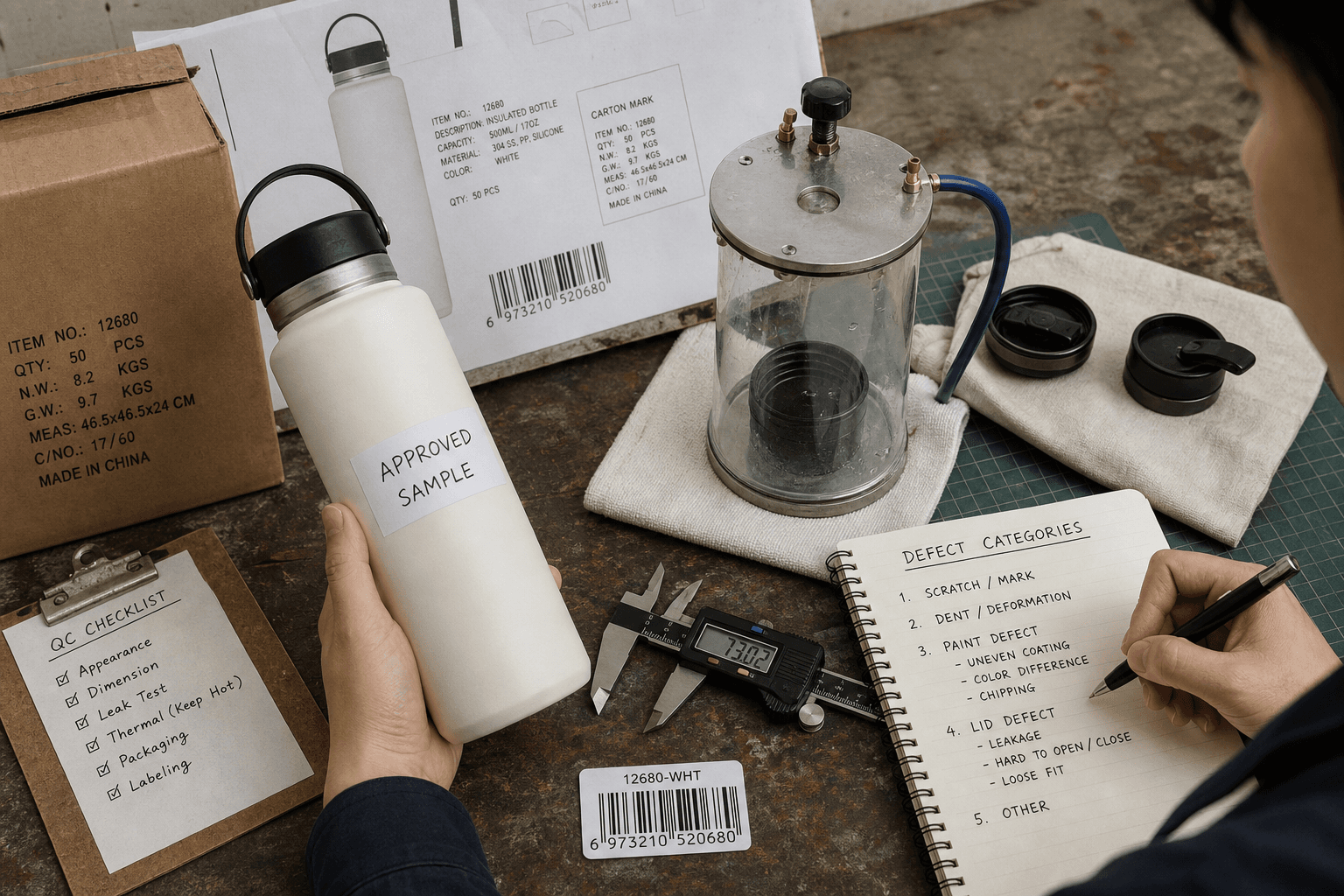
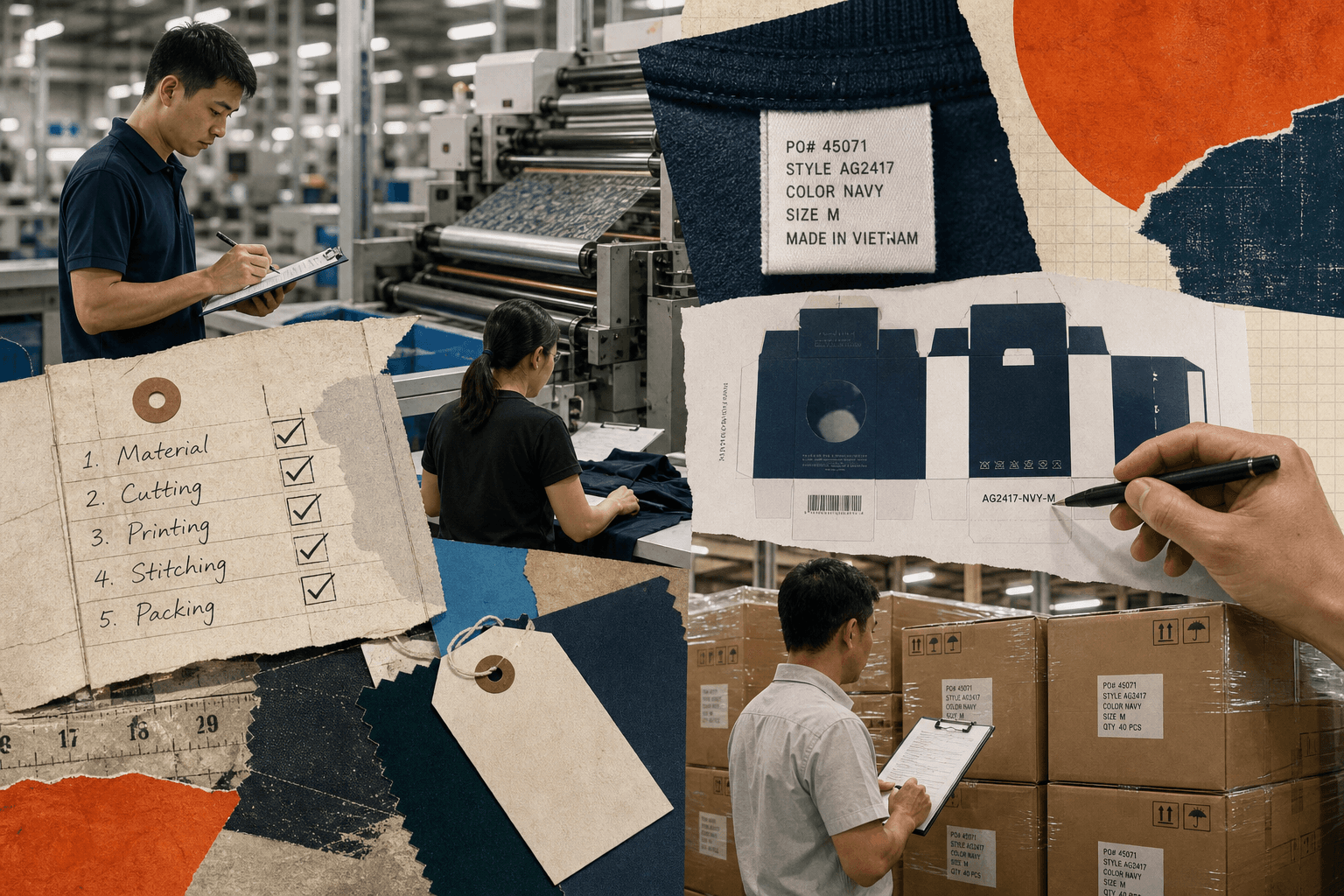
A product inspection is strongest when you need a release decision on goods that already exist. It checks a sample from the lot against your approved requirements: dimensions, appearance, workmanship, labeling, count, packaging, assortment, and any simple on-site tests you have defined.
Its strength is directness. You are not asking whether the supplier seems organized. You are asking whether this batch appears to match the agreed standard.
Its limit is also clear. Acceptance sampling is still sampling. ASQ’s guidance explains that attribute sampling is used to infer lot quality from a sample and support accept-or-reject decisions; it is not proof that every unit conforms (ASQ on acceptance sampling). So a passed inspection means the sampled lot met the chosen criteria. It does not mean zero defects. It does not mean the next lot will be as good. It does not mean the factory is generally capable.
That sounds obvious until someone says, “The lot passed AQL, so we’re covered.” Covered for one release decision, perhaps. Not for everything you wish were true.
Worked example 1: new private-label kitchen tool
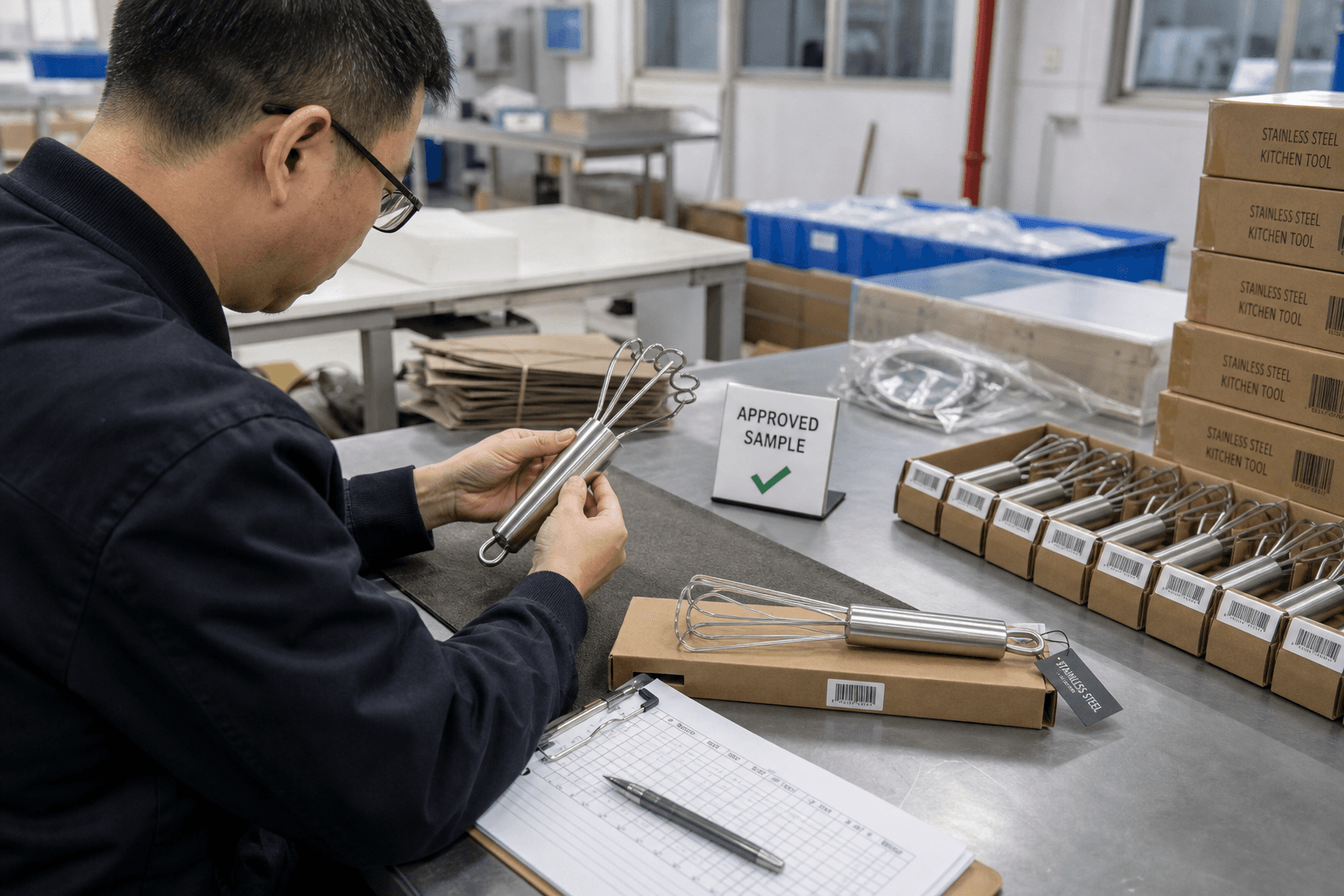
Say you sell a stainless-steel kitchen tool under your own brand. The product has a brushed finish, a formed edge that must feel smooth in use, a barcode label, and a retail carton that needs to survive parcel handling. You have approved a hand sample and now need to choose between two suppliers for first production.
Supplier A offers a lower factory price. Supplier B is higher. On unit price alone, A looks attractive. But that is not the decision yet.
Your first supplier conversation should aim at process evidence, not bargaining theater. Ask both suppliers:
- “How do you verify the incoming steel grade for this SKU?”
- “Show the record that links a finished lot to raw material batch and production date.”
- “How do you control packaging artwork revisions so old labels do not get mixed into this run?”
- “Which operations are done in-house, and which are subcontracted?”
- “What quantity of this item or a close variant did you run in the last six months?”
Now imagine the responses. Supplier A says material certificates are “available if needed,” cannot show a lot traceability record for a similar item, and gives a vague answer on label control. Supplier B shows a receiving check, a lot record for a comparable product, and a clear approval flow for packaging files.
That does not prove Supplier B will ship a good lot. It does tell you which supplier gives you better evidence of repeatability.
Here is a simple hypothetical cost note to make the choice less philosophical:
- Supplier A quote: $2.80 per unit for 5,000 units = hypothetical factory value of $14,000
- Supplier B quote: $2.95 per unit for 5,000 units = hypothetical factory value of $14,750
- Difference: hypothetical $750
If poor revision control leads to one packaging reprint or one delayed shipment, that $750 gap can disappear quickly. The point is not that the higher quote always wins. The point is that unit price is the wrong field to stare at when the main risk is supplier capability. If you need help comparing quotes on the same commercial boundary before you place the order, this is the same discipline used in how to compare manufacturing quotes beyond the unit price.
For this first production run, the recommendation is audit first.
Now carry the same product one step forward. You choose Supplier B, approve pre-production details, and four weeks later the finished goods are ready. At this point, the risk has changed. You already chose the factory. Now you need to know whether to release the lot.
Your inspection brief should be specific enough to produce a real decision. For example:
- finish consistency across sampled units versus the approved sample
- edge smoothness checks against your defect definitions
- barcode readability and correct label version
- pack count and insert accuracy
- carton integrity checks that match your agreed packaging requirement
The decision note here is simple: audit reduced supplier-selection risk; inspection reduces shipment-release risk. Same product, different stage, different evidence.
Worked example 2: repeat textile accessory order
Now imagine a simpler case. You sell a low-complexity textile accessory. This is your fourth order with the same supplier. Material, color, trims, and packaging are unchanged. The previous three lots were acceptable, and there have been no major complaints.
In that situation, a fresh factory audit may add less information than an order-specific inspection. Your immediate risk is not whether the supplier has a functioning operation in theory. It is whether this lot has stitching problems, count errors, color variation, or wrong barcode stickers.
A sensible inspection scope might include workmanship at seams and trim attachment, measurements against the approved tolerance sheet, color comparison against the approved standard, assortment counts by SKU, and carton labeling checks.
The supplier questions are different now because you are trying to see whether this order is truly routine:
- “Has any fabric mill, trim source, or packaging supplier changed since the last approved order?”
- “Did any production step move to another line or subcontractor?”
- “What were the main in-line defects on this run, and how were they corrected?”
- “Were there any late material substitutions or rework lots?”
If the answer to all of those is effectively “no change,” inspection-first is reasonable. If the supplier says the fabric source changed, a subcontractor handled sewing this time, or packaging was revised at the last minute, the case starts to move back toward broader capability review. The recommendation changes because the risk changed.

What neither method proves on its own
This is the part buyers really need to keep straight when products are headed to the United States.
A factory audit is not the same as regulatory compliance. A product inspection is not the same as regulatory compliance either. For applicable general-use consumer products, the U.S. Consumer Product Safety Commission says the manufacturer or importer must issue a General Certificate of Conformity based on test results or a reasonable testing program. For overseas-made products, the importer issues the GCC (CPSC general-use certification guidance). CPSC also states that imported consumer products subject to certification requirements must be electronically filed as of July 8, 2026 (CPSC certificates and eFiling update).
So if your product falls under a CPSC rule, a passed inspection does not replace testing or certification requirements, and a clean audit does not do that either. Product rule applicability depends on the product, material, age grade, and market, so you need to confirm what actually applies rather than waving around a generic compliance file.
The import side is similar. U.S. Customs and Border Protection expects importers to exercise reasonable care in providing accurate and timely import information (CBP informed compliance guidance). That does not mean CBP requires factory audits for ordinary imports. It does mean the legal responsibility does not evaporate because your supplier sounded confident on a late-night call.
For some categories, supplier verification goes much further. Food is a separate regime. FDA’s Foreign Supplier Verification Program can require more formal supplier verification and, in some cases, favor or require onsite audits depending on the hazard and control structure (FDA FSVP guidance, FDA supplier verification resources). Most hardgoods and apparel brands are not operating under that framework, but it is a good reminder that “audit or inspection” is not the whole compliance question.
Compare them on the buying criteria that matter
If you compare both options against the same business criteria, the decision gets cleaner.
On specification fit, inspection is stronger because it checks the actual lot against the approved requirements. Audit helps only indirectly by showing whether the supplier appears able to control the spec over time.
On landed cost, both matter in different ways. An audit can keep you from committing deposits, packaging inventory, and management time to the wrong supplier. An inspection can keep you from paying final balance, freight, duty, and warehousing on a bad lot. If you need to see those costs on the same model before approving the order, build the full landed view rather than comparing factory price in isolation, as discussed in landed cost calculation for ecommerce.
On MOQ, an audit can reveal whether the supplier is truly set up for your order size or merely willing to say yes and improvise later. Inspection does not solve MOQ mismatch. It only tells you what came out this time.
On internal workload, audits take more effort upfront because you are evaluating systems, records, capacity, and process fit. Inspections are more operational and order-based. They become part of the release workflow.
On lead time, audits happen earlier and may slow factory approval. Inspections happen near shipment and may delay release if they uncover serious issues. Pick the delay you can still afford. A problem found before you place the order is usually cheaper than the same problem found when cartons are stacked by the loading bay.
On cash exposure, audits reduce the risk of committing to the wrong supplier. Inspections reduce the risk of paying for the wrong lot. Neither is glamorous. Both are cheaper than optimism.
What to resolve in the next supplier conversation
Before you book either service, get specific about what evidence would change your next decision.
If you are qualifying the supplier, ask for the records and controls that show repeatability. Ask how incoming materials are verified, how product and packaging revisions are controlled, how lots are traced, what is subcontracted, and what comparable production has been run recently.
If you are approving a shipment, define the inspection criteria in plain terms. Which measurements matter? Which cosmetic issues are unacceptable? Which label version is current? What carton checks matter? What defect definitions will decide ship, rework, or hold?
Then ask one question that usually cuts through the fog: At what stage would a failed finding still be cheap enough to correct? If the answer is before bulk production starts, that points toward an audit or deeper process review. If the answer is before final payment and shipment, that points toward inspection as the release gate.
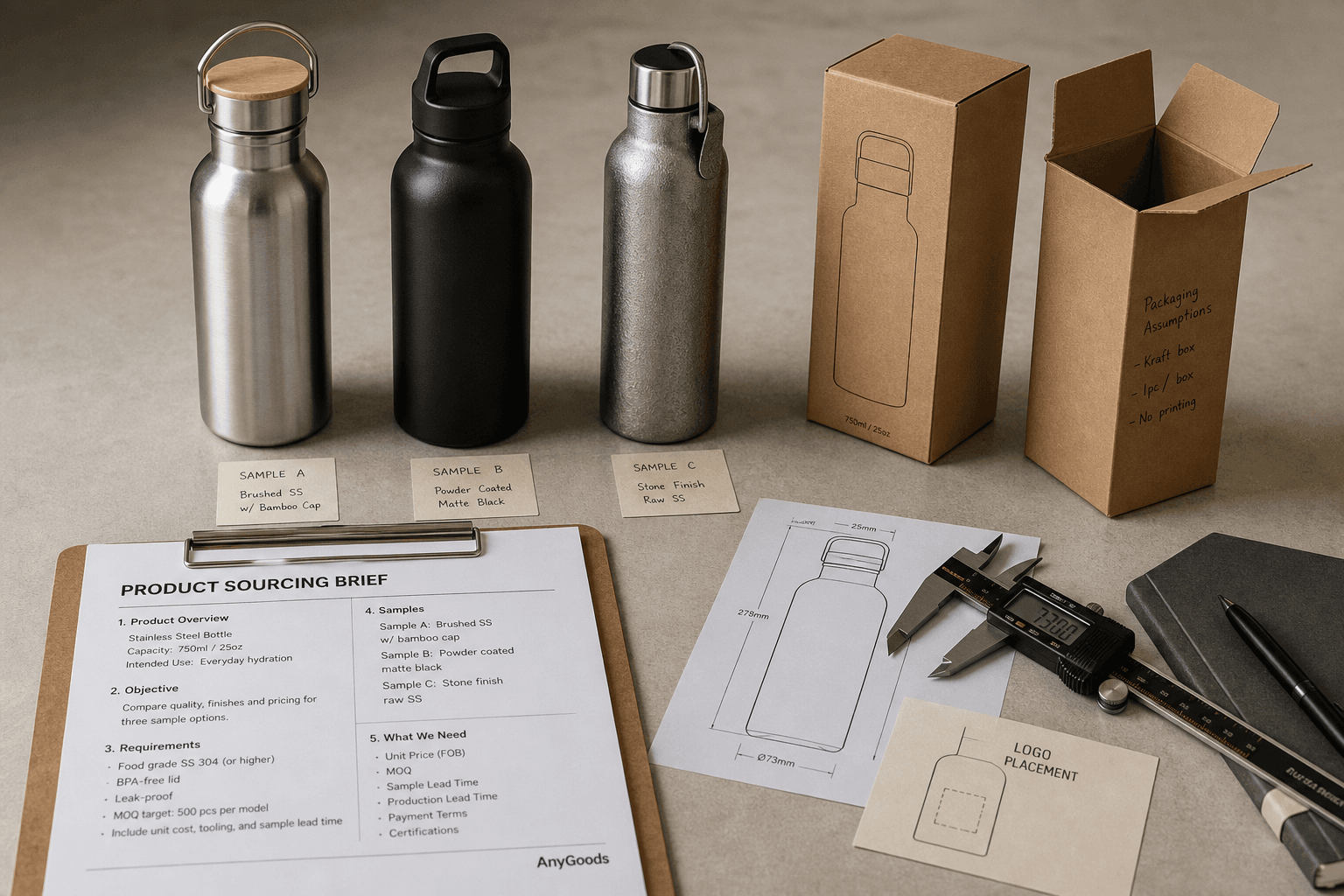
If your team is still deciding whether the bigger risk is supplier capability or lot quality, AnyGoods can help map the brief, vet factory fit, compare samples and quotes, and coordinate quality checks while keeping the factory relationship in your name. The process is outlined at AnyGoods services.
Your next move is not complicated. Write down the sentence you need answered this week: “Can this supplier run the process?” or “Should this lot ship?” Then book the check that answers that sentence.
Product sample review
Record how a sample performs against the brief and what must change before production.
A sample review is not a product certification. Verify the requirements and appropriate test methods for the product and destination.
See a completed example
- Sample identity
- Record supplier, sample date, version, material and drawing revision. Photograph identifying details.
- Dimensions and construction
- Measure specified dimensions and inspect seams, edges, fasteners or joints. Record actual observations and agreed tolerances.
- Function and intended use
- Describe a repeatable use test and the result. Example: place the desk organizer on a flat surface and check whether it sits securely.
- Materials and finish
- Compare the sample with agreed materials and color references. Record visible variation and evidence supplied for material claims.
- Packaging and shipment
- Inspect protection, fit, labels and carton information. Identify transit tests that should be agreed for the actual shipment.
- Required documentation
- List product-specific test reports or compliance information that need independent verification; do not infer compliance from appearance.
- Decision and next revision
- Approve, reject or request changes. Name the approver and create an unambiguous reference for the next sample or production run.
Make your own brief
Your entries stay in this tab. Download before leaving; they are not saved or sent to AnyGoods.
Sources & further reading
- ISO 19011:2026 - Guidelines for auditing management systemsiso.org
- ISO 19011:2026(en) scopeiso.org
- ANSI/ASQ Z1.4 & Z1.9 Sampling Plan Standards for Quality Controlasq.org
- Attribute Sampling Plans - Inspection by Variables & Attributes Z1.4 & Z1.9asq.org
- CPSC General Use Products: Certification and Testingcpsc.gov
- CPSC Update: Certificates of Compliance and eFilingcpsc.gov
- CBP informed compliance materialcbp.gov
- FDA FSVP guidance for food importersfda.gov
- FDA supplier verification resourcesfda.gov
Published by AnyGoods Editorial. Examples are illustrative unless a source is identified. Updated .