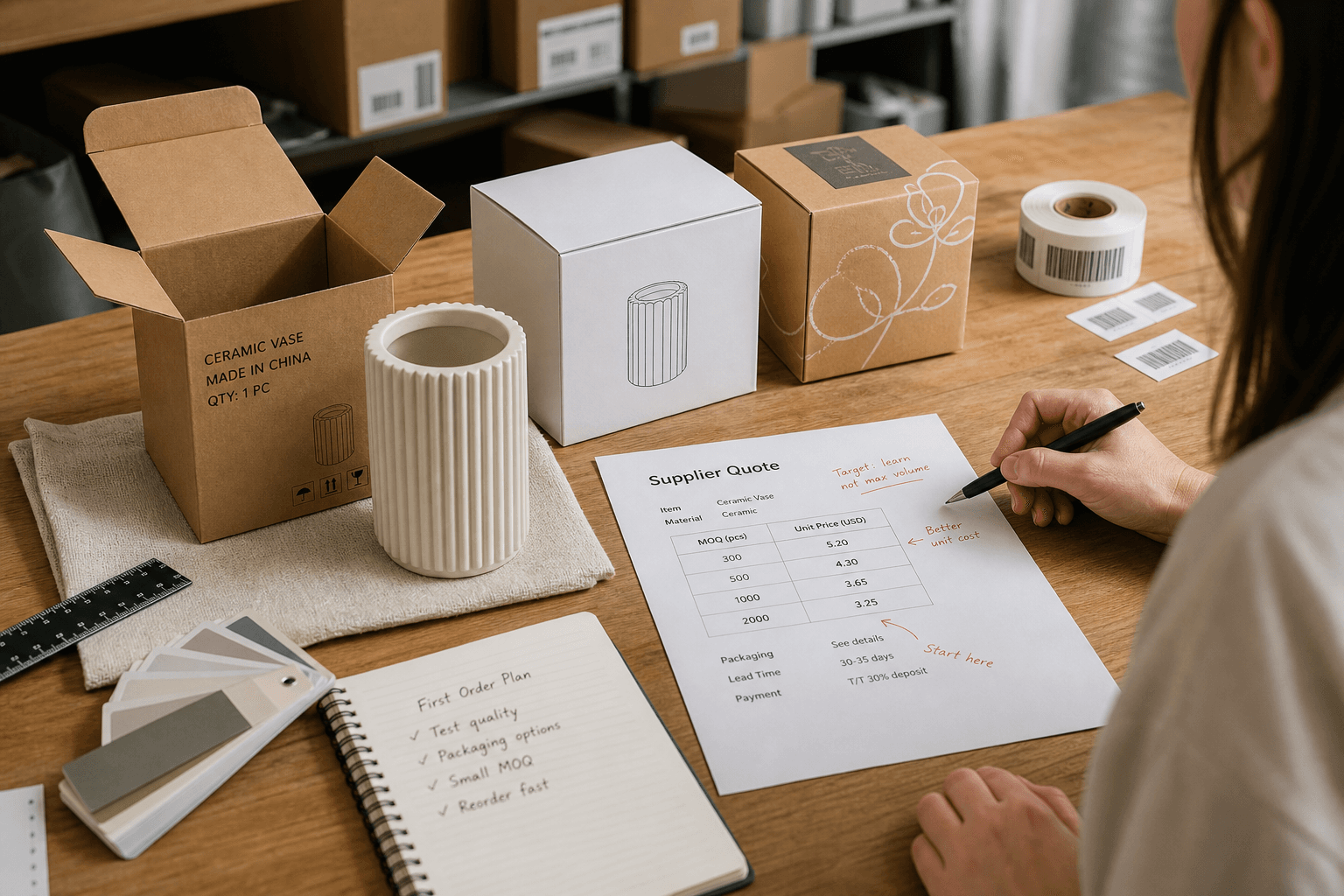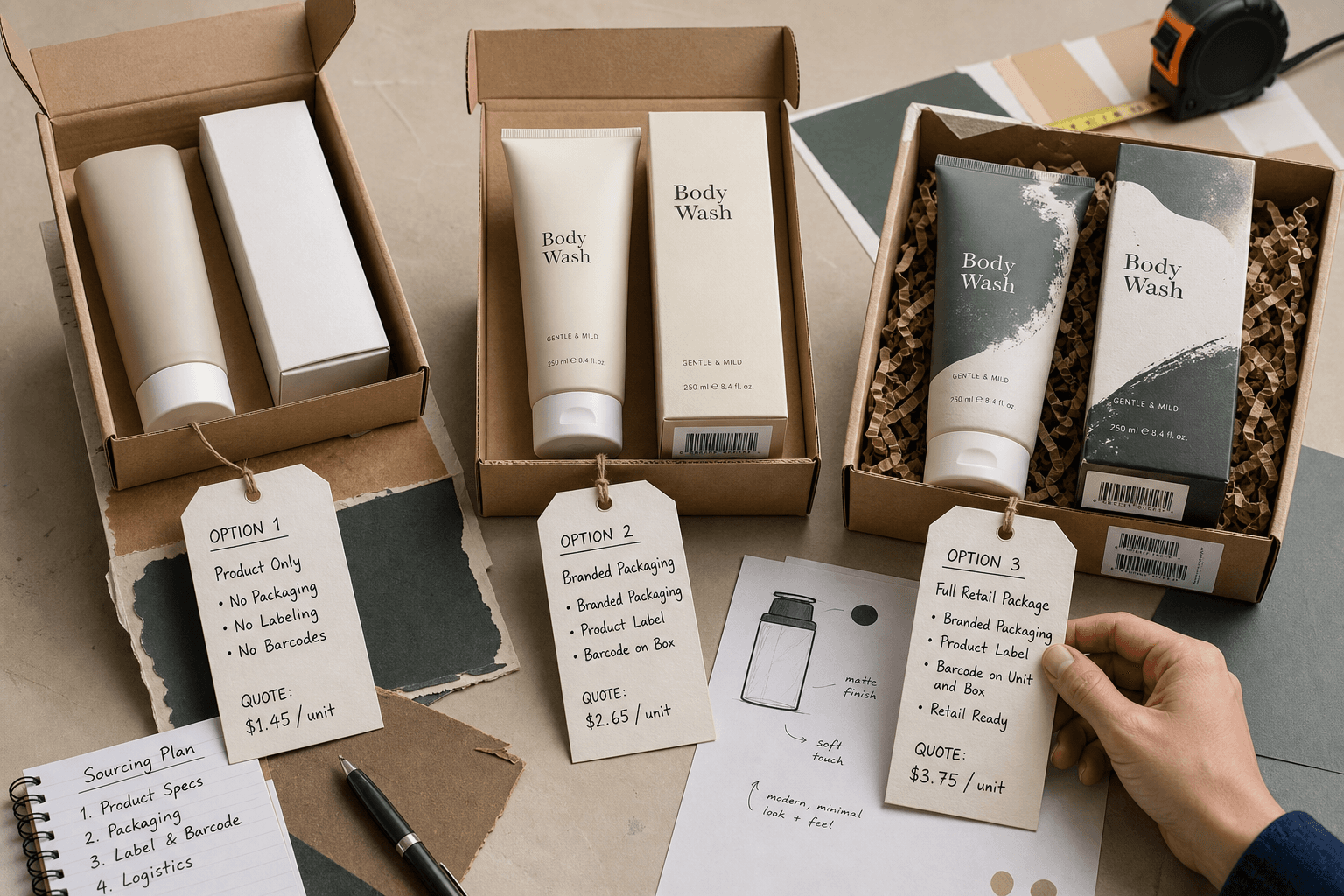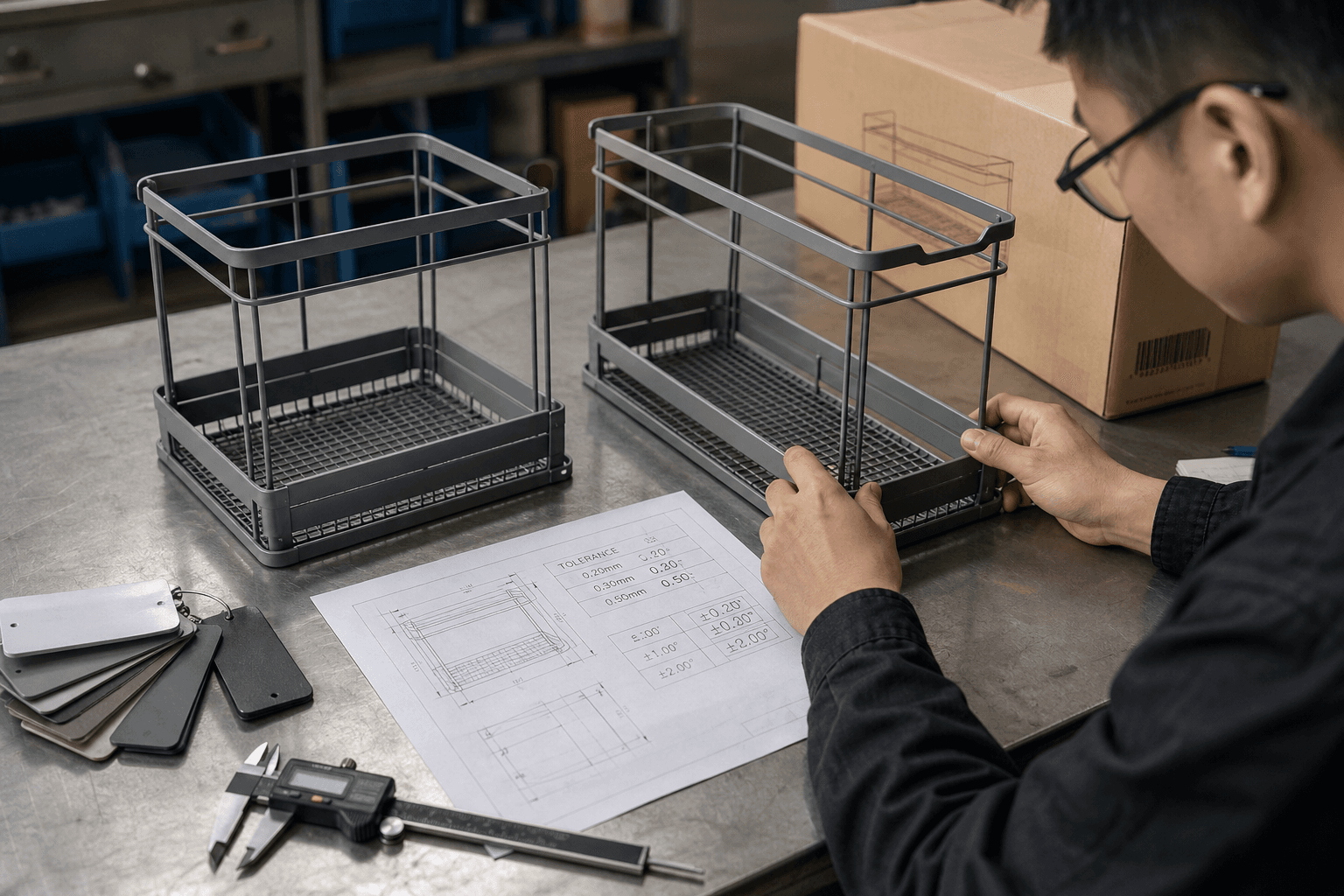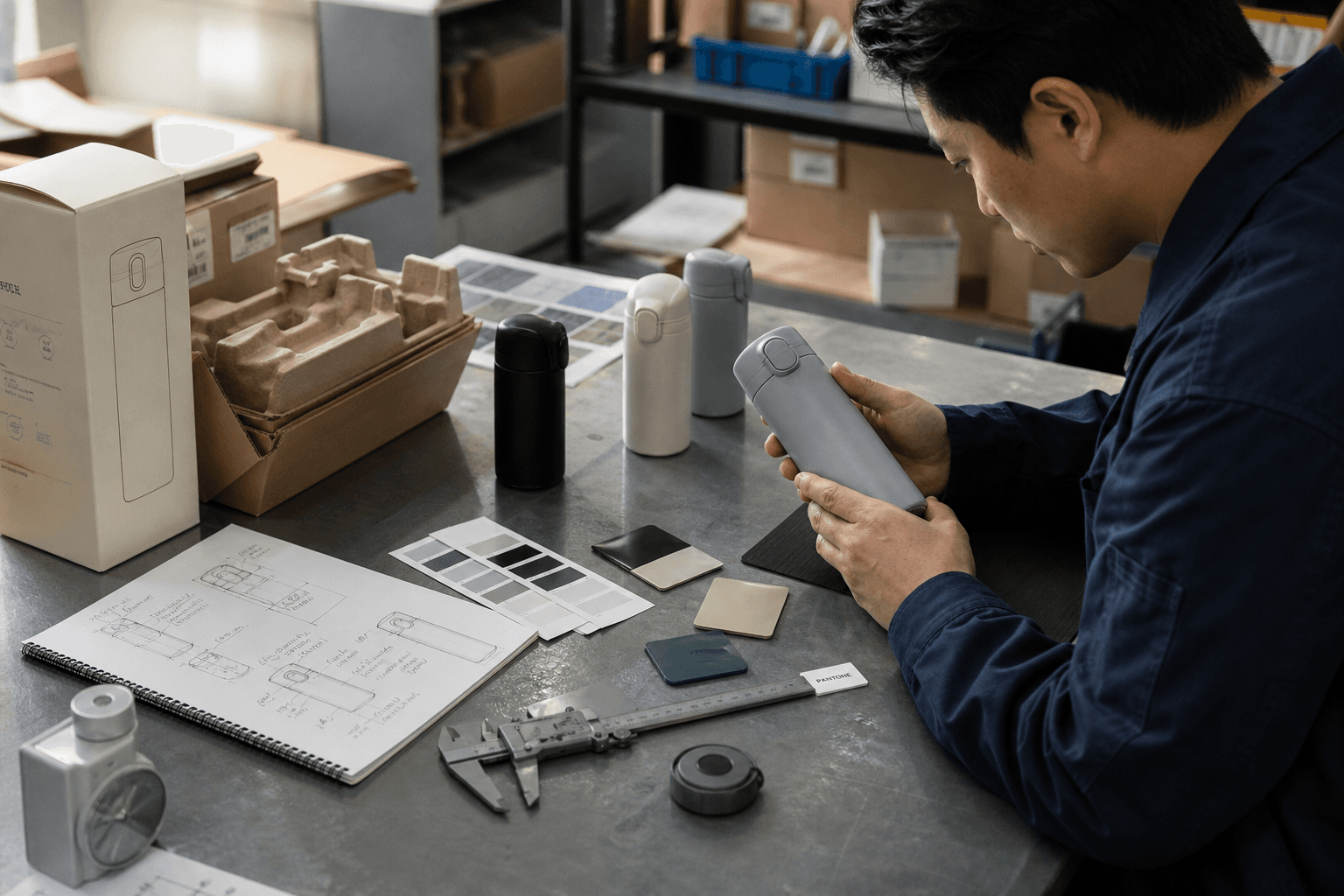
Stop searching for factories. Start ruling them out.
The usual mistake is easy to recognize. A founder gets three quotes, circles the cheapest one, and asks for samples. Two weeks later, the quotes turn out to describe three different products.
One factory priced a plain carton. Another included the carton but not the insert. The cheapest quote needed a new mold, but that cost was tucked into a separate message as if it were a minor personality trait. Nobody had settled whether the product could be documented for the target market.
That is the real problem behind the search for how to find a manufacturer for a product. You are not trying to locate a building with machines in it. You are deciding which factories are worth your time, sample budget, and eventually a deposit.
My recommendation is to treat supplier search as a qualification decision, not a directory exercise. A factory belongs on your shortlist only if it can show a credible path to make your product as specified, for the market you plan to sell into, at an order size and cash commitment your business can absorb.
What information you need before deciding who is worth sampling
If your product is still a collection of references and open questions, start with turning a first product idea into a factory-ready brief. That guide helps separate fixed requirements from choices you want suppliers to propose.
Before you compare factories, you need a brief that forces comparable answers. If the brief is vague, the quote will be imaginative. Factories are very good at quoting the product they think you mean.
At this stage, five inputs matter.
First, define the product itself. That means dimensions, materials, finish, color reference, packaging format, labels, and any construction details that cannot move. If you only have reference images, say that plainly. If surface finish or wall thickness matters, state it now, not after the first sample arrives looking mysteriously cheaper.
Second, define the sales market and channel. A product sold in the U.S. through Shopify and Amazon may face different documentation and product-rule issues than the same item sold elsewhere. For many U.S.-bound regulated consumer products, certificate data now has to move through the import process; the CPSC states that eFiling for certificate data is required for most regulated consumer products beginning July 8, 2026, and regulated products need certification based on testing or a reasonable testing program (CPSC certificate guidance, general use product certification and testing). That does not mean every product follows the same path. It does mean your shortlist should include suppliers that can discuss the right path for your product instead of waving at “compliance” from across the room.
Third, define the order shape. Give a target MOQ, a realistic first order quantity, a target ex-factory price if you have one, and the launch date you are actually planning against. A factory that only works at 20,000 units is not wrong. It is just wrong for you.
Fourth, state the unknowns. If you are uncertain about a material substitution, packaging durability, test route, or whether new tooling is needed, say so. Hidden uncertainty creates fake certainty in quotes.
Fifth, define what a sample must prove. Not “please send sample.” More like: production-intent material, final finish, assembled retail pack, barcode placement, and fit with the intended insert. A fast sample that proves nothing is still a slow project.
Read the video transcript
If you're hunting for a manufacturer, the real headache isn't finding factories. It's wasting time on quotes that look cheaper only because they're describing different products. A useful shortlist starts when you treat sourcing like qualification. You're choosing who can realistically make your product, for your market, at a quantity and cash level you can handle. That only works with a tighter brief: product details, sales market, target quantity, open unknowns, and what the sample must prove. Otherwise factories fill gaps with assumptions. In the article's kitchen accessory example, one supplier's lower unit price hid separate mold cash, a buyer-sourced insert, and a bigger minimum order. The higher quote tied up less cash overall. So the next conversation should pin down exclusions, sample materials, packaging scope, and who owns tooling. That's why glossy badges alone aren't enough; they don't prove your exact fit. You don't need the most replies, just the clearest ones. Comparable quotes and direct answers reveal which factory deserves a sample, while uncertainty stays cheaper to fix early.
Where to look is less important than what you ask
Use directories, referrals, trade shows, sourcing partners, and manufacturer networks as lead sources. That part is ordinary. NIST’s supplier scouting program is a good reminder of the right principle: the useful question is whether a supplier has the technical and production capability for the requirement, not whether it appears in a search result for the general category (NIST supplier scouting).
But a listing is not evidence, and a badge is not evidence either. ISO 9001 can be one positive signal because it is a quality management system standard intended to help organizations meet customer and applicable requirements consistently. It is not proof that the factory can hold your tolerance, source your material correctly, or support your market documentation (ISO 9001 standard page).
So when you build a shortlist, do not ask who replied. Ask who replied with clear assumptions, relevant product experience, and answers that survive a follow-up question.
Compare factories on the same criteria
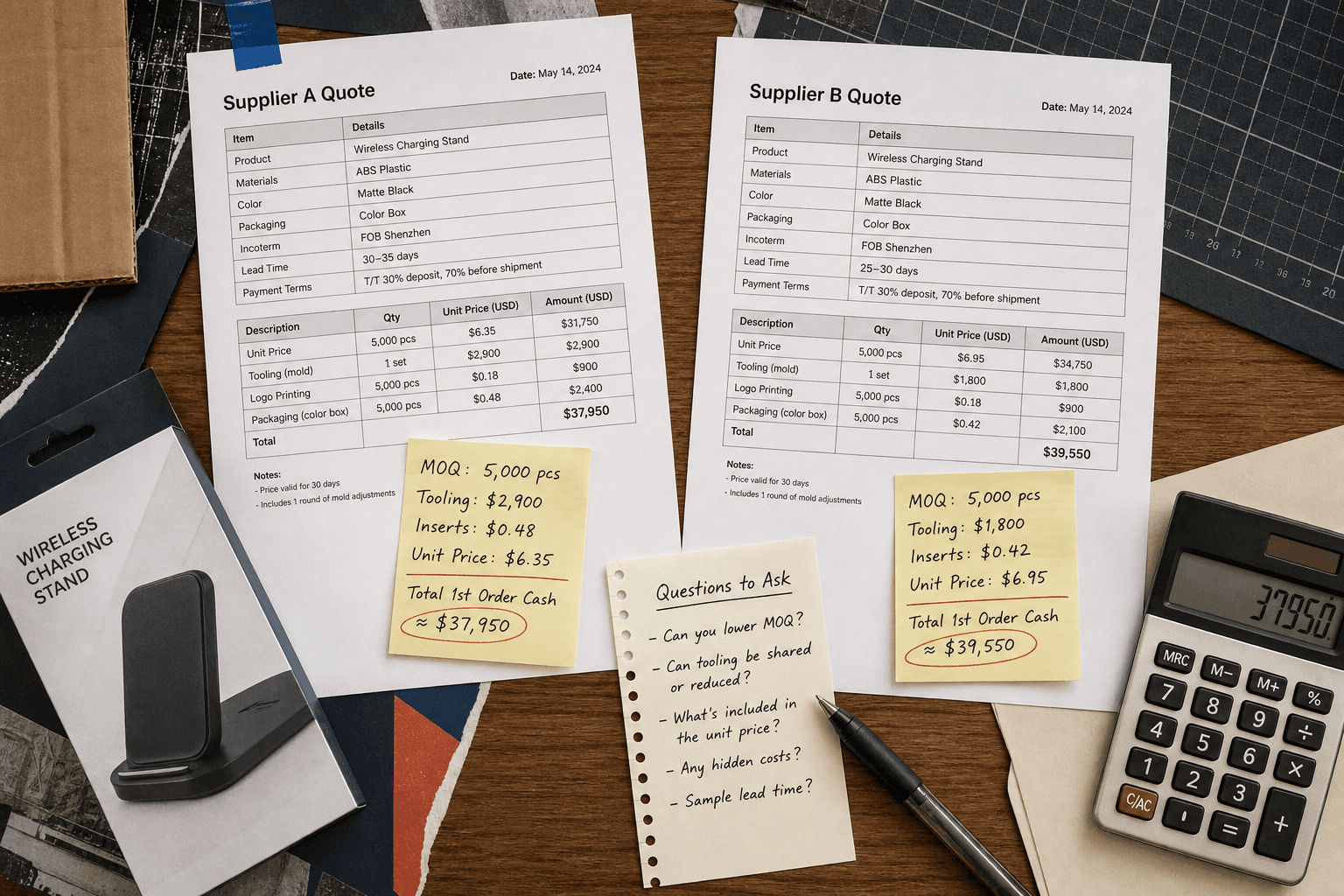
When the quotes arrive, use our manufacturing quote comparison guide to separate recurring unit costs from tooling, packaging, minimum quantities and payment timing. Its worked examples show why the lowest unit price can require more cash overall.
Before samples, the cleanest comparison is not country versus country or direct factory versus intermediary. It is factory versus factory on the same decision criteria:
| Criteria | What to inspect before samples | What changes if the answer is weak |
|---|---|---|
| Specification fit | Materials, finish, dimensions, packaging scope, process notes | Remove from shortlist or tighten brief |
| Regulatory fit | Which rules may apply, what records support them, who holds documents | Escalate for specialist review or drop supplier |
| Landed-cost assumptions | Tooling, packaging, buyer-supplied inputs, invoice assumptions | Rebuild quote comparison |
| MOQ | First order minimum and replenishment minimum | Change launch quantity or reject |
| Quality risk | Product-class experience, control points, outsourced steps | Increase sample scrutiny or reject |
| Lead time | Sample timing, tooling timing, production timing | Adjust launch plan or reject |
| Internal workload | How much coordination you must do across packaging, testing, freight readiness | Decide whether price savings are worth the burden |
| Cash exposure | Tooling deposits, higher MOQ, packaging spend, slower turns | Rework order plan or choose simpler route |
The tradeoff that usually changes the recommendation is lower unit price versus lower execution risk. If the product is simple, mature, and built from standard materials, you can lean harder on price. If it involves custom tooling, unusual packaging, children’s use, electrical parts, or claim-sensitive origin requirements, a slightly higher quote can be the cheaper decision.
Example 1: the kitchen accessory quote that lies by omission
Say you sell a stainless-steel kitchen accessory in the U.S. DTC market. No electronics. Not a children’s product. You need a brushed finish, laser logo, molded insert, printed retail carton, and master carton sized for ecommerce handling.
You receive two hypothetical quotes.
Supplier A offers:
- Unit price: $2.10
- MOQ: 5,000 units
- Tooling: new mold, buyer pays $3,200 separately
- Packaging: retail carton included, insert sourced by buyer
- Production lead time: 35 days after approvals
Supplier B offers:
- Unit price: $2.32
- MOQ: 3,000 units
- Tooling: existing production tool adapted with $600 setup charge
- Packaging: carton and insert included
- Production lead time: 42 days after approvals
If you stop at unit price, Supplier A appears cheaper. That is how people accidentally buy expensive inventory.
Here is the same comparison using hypothetical assumptions, clearly labeled for illustration only.
For Supplier A at 5,000 units:
Product cost = 5,000 × $2.10 = $10,500
Tooling cash = $3,200
Buyer-sourced insert = 5,000 × $0.18 = $900
Total pre-freight spend = $10,500 + $3,200 + $900 = $14,600
Effective pre-freight cost per unit = $14,600 ÷ 5,000 = $2.92
For Supplier B at 3,000 units:
Product cost = 3,000 × $2.32 = $6,960
Setup charge = $600
Insert cost = included
Total pre-freight spend = $6,960 + $600 = $7,560
Effective pre-freight cost per unit = $7,560 ÷ 3,000 = $2.52
That does not prove Supplier B is always cheaper. It proves the quotes were not comparable until you accounted for tooling, packaging scope, and MOQ. It also shows a second issue: Supplier A ties up far more cash before you have sold a single unit.
Now carry the same example one step further. If you pay for a mold or provide buyer-supplied production inputs, those may matter in customs valuation. CBP states that declared commercial invoice value can include assists, royalties, packing, and other production elements where applicable, and customs rules define assists to include buyer-supplied molds, dies, tools, and certain design work (CBP invoice value guidance, 19 CFR 152.103 transaction value). That does not tell you the duty outcome for this product; classification and transaction details still matter. It does tell you not to treat “tooling separate” as if it lives outside the economic reality of the order.
So the next supplier conversation for this kitchen accessory should resolve these points in writing:
- Will the sample use production-intent steel thickness and the exact brushed finish?
- Is the insert included in both the sample build and the production quote?
- Who owns the mold, where is it stored, and what happens if production moves later?
- What is excluded from the quote: inserts, barcode labels, export carton markings, test costs, or anything else?
If Supplier A answers crisply and Supplier B stays vague, the decision could still swing. But at least now you are choosing between real offers instead of two numbers that happened to land in your inbox.
Example 2: the children’s night light where MOQ is the wrong argument
Now imagine a private-label children’s night light for the U.S. market.
Supplier A says the product is “CE and UL approved,” offers a low MOQ, and shares a component data sheet.
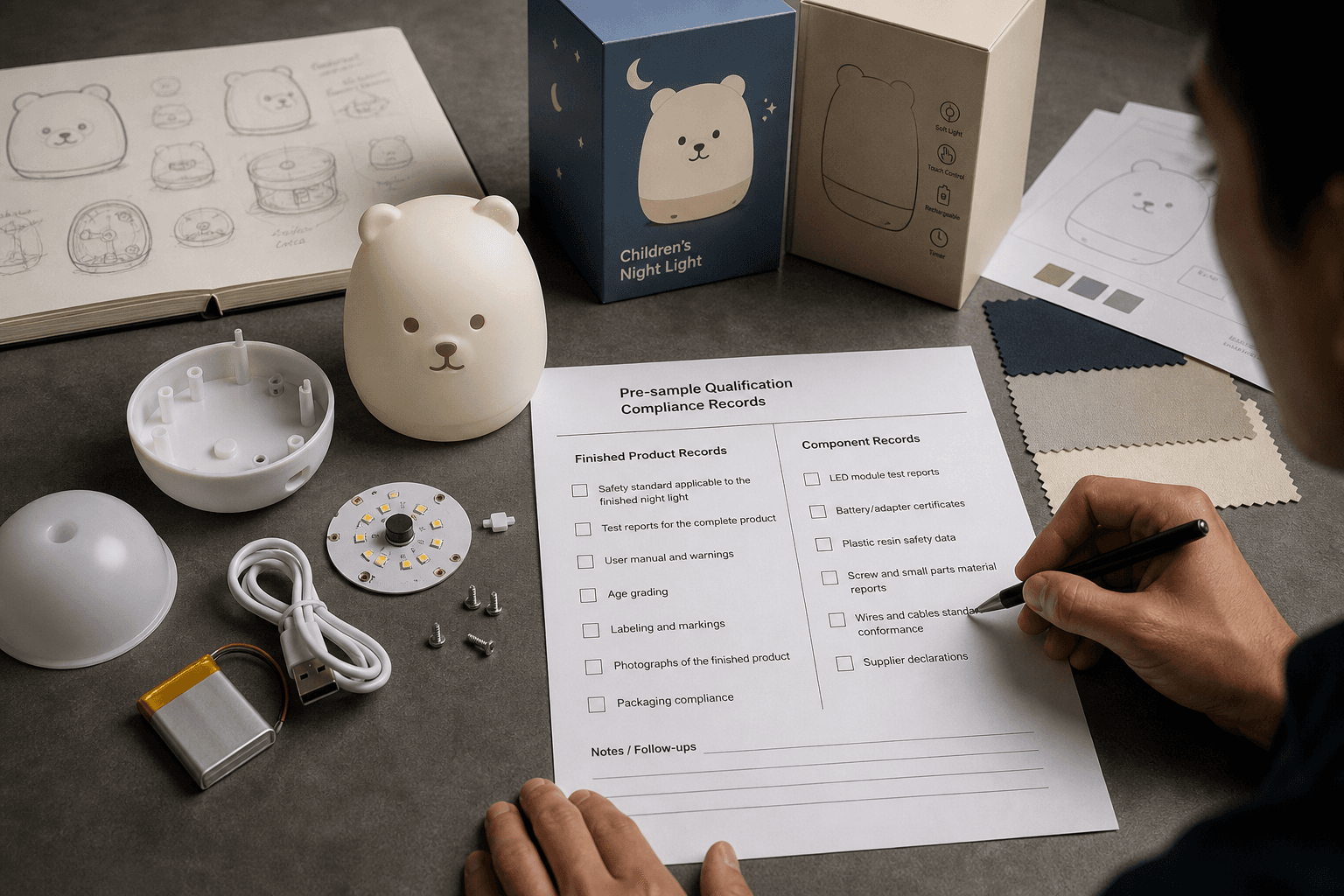
Supplier B asks whether the product will be marketed for children’s use, whether batteries are involved, and which finished-product records will support U.S. sale. MOQ is higher.
Supplier B is the better shortlist candidate unless later facts change the picture.
The reason is simple. The real question is not whether the factory can assemble a light. It is whether the supplier can support the compliance path for the exact product you plan to import and sell.
For children’s products, the CPSC states that nearly all children’s products require third-party testing through a CPSC-accepted laboratory and support a Children’s Product Certificate (CPSC rules requiring third-party testing). Regulated general-use products follow their own certificate rules (general use product certification and testing). The key limit here is important: these pages do not tell you which exact rule applies to your night light without more product facts. They do tell you that “we have CE” is not an answer to a U.S. children’s product question.
The same problem shows up in electrical claims. OSHA’s NRTL program recognizes labs within specific scopes and standards, so a claim like “UL certified” only means something if the supplier can identify the relevant standard, the recognized lab, and whether the certification applies to the finished product rather than only a component (OSHA NRTL FAQ).
That changes what you should ask before sampling:
- Which exact U.S. rules or standards do you believe apply to this finished product as sold?
- Are the records you shared for the complete product, or only for components such as the power supply or battery?
- Which lab or NRTL is involved, for which standard, and for which model?
- Who prepares and retains the certificate records needed for import?
- What production changes would trigger retesting or document updates?
Notice what happened here. The higher-MOQ supplier moved forward because it understood the work, not because it used nicer adjectives.
Country should follow the brief, not lead it
Founders often start by picking a country and only later defining the product. That feels decisive. It usually just delays the useful conversation.
If your brand story depends on a U.S. origin claim, manufacturer choice becomes a legal and marketing issue, not just a factory issue. The FTC says an unqualified “Made in USA” claim requires that the product be “all or virtually all” made in the United States (FTC Made in USA guidance). Final assembly in the U.S. is not automatically enough. So if that claim matters, screen early for component origin, where substantial production happens, and what exact claim you intend to make.
If the product is a cosmetic or private-label beauty item, the supplier conversation changes again. FDA guidance under MoCRA addresses facility registration and product listing requirements for cosmetics (FDA cosmetics registration guidance). That does not mean every beauty-adjacent product follows the same rule set. It does mean a cosmetics manufacturer should be screened for documentation path, not just filling capacity.
If shipments will use wood pallets or crates, packaging may belong in supplier qualification too. APHIS requires regulated wood packaging material entering the U.S. to meet ISPM 15 treatment and marking requirements (APHIS wood packaging material guidance). If one supplier uses compliant wood packaging and another shrugs at the question, you have learned something useful before production, which is the cheapest possible time to learn it.
So yes, compare suppliers across China, Vietnam, Thailand, Malaysia, Japan, South Korea, Taiwan, Portugal, Spain, Italy, Mexico, the U.S., Canada, and elsewhere when the product warrants it. Just compare actual capability, documentation, lead time, and order economics. Country stereotypes are not a sourcing method.
What the next supplier conversation should settle
Before you request samples, the next exchange should remove the biggest unknowns, not create ten new ones.
Ask the supplier to describe the manufacturing process in plain language. What is custom, what is standard, which parts are outsourced, and what changes between sample build and mass production? A factory that cannot explain its own process clearly will not become clearer after you pay a deposit.
Ask for quote assumptions in writing. What is included in unit price, and what is excluded? Press specifically on tooling, inserts, packaging setup, testing, labels, export cartons, and sample charges.
Ask which market rules they think apply to your product and what evidence supports that view. Do not ask, “Are you compliant?” That question invites a yes. Ask which standards, which documents, which lab, which model, and who keeps the records.
Ask what the sample is meant to prove. Cosmetic finish, fit, packaging, function, or process capability are different objectives. If you do not define the purpose, you are just paying for freight on an object.
Ask what quantities they already run in this product type today. Not total plant capacity. This type of product, with this process, at roughly this order size. Big factories enjoy sounding big.
Ask how they control changes after approval. If resin grade, plating source, carton board, or battery supplier changes, what happens to records, tests, and approval status? This answer tells you a lot about what production will feel like six weeks before launch.
When outside help earns its keep
Some teams should source directly. If you already have clear specs, known product requirements, internal quality control capability, and enough purchasing volume to get disciplined responses from factories, you may not need much outside coordination.
But if you are comparing suppliers across several countries, balancing custom packaging against MOQ, or sorting through uncertain compliance and tooling questions at the same time, outside support can reduce the amount of guessing that gets mistaken for procurement. If you need help matching manufacturers to a brief and comparing the factories that are actually worth sampling, AnyGoods explains its sourcing workflow at /#services and you can start a conversation at /#contact.
Send a tighter brief to three or four suppliers, force the quotes onto the same assumptions, and make the next conversation settle the missing facts. That is the decision that moves you toward a usable sample instead of a longer email thread.
Supplier quote comparison
Put competing quotes on a common basis before choosing a factory or negotiating an existing SKU.
These fields organize a comparison; they do not calculate taxes or replace a current freight quote. Mark every estimate and its date.
See a completed example
- Common specification
- Use the same drawing revision, materials, approved reference, quantity and packaging requirements for every supplier.
- Unit price and setup costs
- Supplier A / B / C: unit price, currency, MOQ, tooling, sample fees, setup fees and what is excluded.
- Delivery basis and logistics
- Record the exact Incoterm, version and named place. Separately record freight, insurance, brokerage and destination handling assumptions.
- Landed-cost assumptions
- Itemize applicable verified duties, shipping and nonrecoverable fees. Divide order-level costs by the relevant sellable units. Separate recoverable taxes from expense assumptions.
- Quality and lead time
- Compare tests, inspection scope, acceptable variation, sample approval, production lead time and capacity evidence.
- Cash and risk
- Record deposits, balance timing, currency exposure, inspection remedies and cost of financing or storing extra units.
- Retail pricing context
- Record net selling price, discounts, payment fees, fulfillment, returns and acquisition-cost assumptions separately. Calculate contribution using a clearly defined denominator.
- Decision and open questions
- State which option you favor and why. List unresolved assumptions that could reverse the decision before you approve the order.
Make your own brief
Your entries stay in this tab. Download before leaving; they are not saved or sent to AnyGoods.
Sources & further reading
- Complying with the Made in USA Standard | Federal Trade Commissionftc.gov
- General Use Products: Certification and Testing | CPSCcpsc.gov
- Rules Requiring Third-Party Testing and a Children's Product Certificate | CPSCcpsc.gov
- Update: Certificates of Compliance and eFiling | CPSCcpsc.gov
- What value should be on the commercial invoice submitted to U.S. Customs and Border Protection?help.cbp.gov
- 19 CFR § 152.103 Transaction valuefederal.elaws.us
- OSHA's Nationally Recognized Testing Laboratory (NRTL) Program - FAQosha.gov
- ISO 9001 - Quality management systems — Requirementsiso.org
- Supplier Scouting | NISTnist.gov
- Wood Packaging Material | APHISaphis.usda.gov
- Guidance for Industry: Compliance Policy for Cosmetic Product Facility Registration and Cosmetic Product Listing | FDAfda.gov
Published by AnyGoods Editorial. Examples are illustrative unless a source is identified. Updated .