You don't usually notice a bad sourcing brief when you send it. You notice it when the quotes come back looking tidy enough for a spreadsheet and useless enough for a decision.
One supplier priced the bottle with an individual box. Another assumed bulk pack. One quote is EXW, another is FOB, and two suppliers never say. Someone writes “AQL passed,” as if that settles quality by magic. It doesn't. The cheapest line on the sheet often turns out to be the quote with the fewest stated assumptions.
That is why a good product sourcing brief template is not the longest document. It is the one that makes suppliers answer the same question on the same basis.
If you're comparing factories this week, my recommendation is simple: use a normalized brief, not a loose RFQ. Give every supplier the same inputs, require the same reply structure, and separate fixed requirements from supplier suggestions. You'll probably get fewer casual replies. That's a feature, not a tragedy.
If you're still very early and the product is not fully defined, use two stages. First, a short capability screen. Then send the full brief only to serious candidates. If you need help with that earlier step, How to source your first product: from idea to a factory-ready brief covers the handoff from idea to quoteable spec.
Start with the market, not the mood board
Most weak briefs begin with what the product should look like. That matters, but it is not enough to get comparable replies.
Start with where the product will be sold, who it is for, and what claims you plan to make. Those points change what belongs in the quote and what cannot be left to supplier guesswork.
That matters because some requirements are market- or category-specific, not optional admin. For U.S. children's products, the CPSC says tracking label information must be on the product and packaging to the extent practicable, including details that identify who made it, when, and from which production run, where applicable under the law (CPSC tracking label guidance). For children's products subject to applicable safety rules, the domestic manufacturer or importer must issue a Children's Product Certificate based on qualifying testing (CPSC Children's Product Certificate guidance).
If you plan to sell in the EU, supplier documentation and traceability expectations may change again because covered products placed on the market need a responsible economic operator in the EU under the GPSR framework (EU GPSR business guidance). If your marketing team is already dreaming about an unqualified “Made in USA” label, say so now, because the FTC rule applies an “all or virtually all” standard to that claim (FTC Made in USA Rule). Domestic assembly alone does not settle it.
So the first block of your brief should answer, in plain English:
- what the product is and how it will be used
- which markets it will be sold into
- who the end user is, including age grading if relevant
- what product or origin claims are already decided
- whether the item is children's, electrical, food-contact, wearable, cosmetic-adjacent, PPE-adjacent, or otherwise likely to trigger extra review
If something is undecided, mark it as undecided. That is still better than silence. Silence forces suppliers to invent assumptions, and invented assumptions are what make quotes impossible to compare.
Read the video transcript
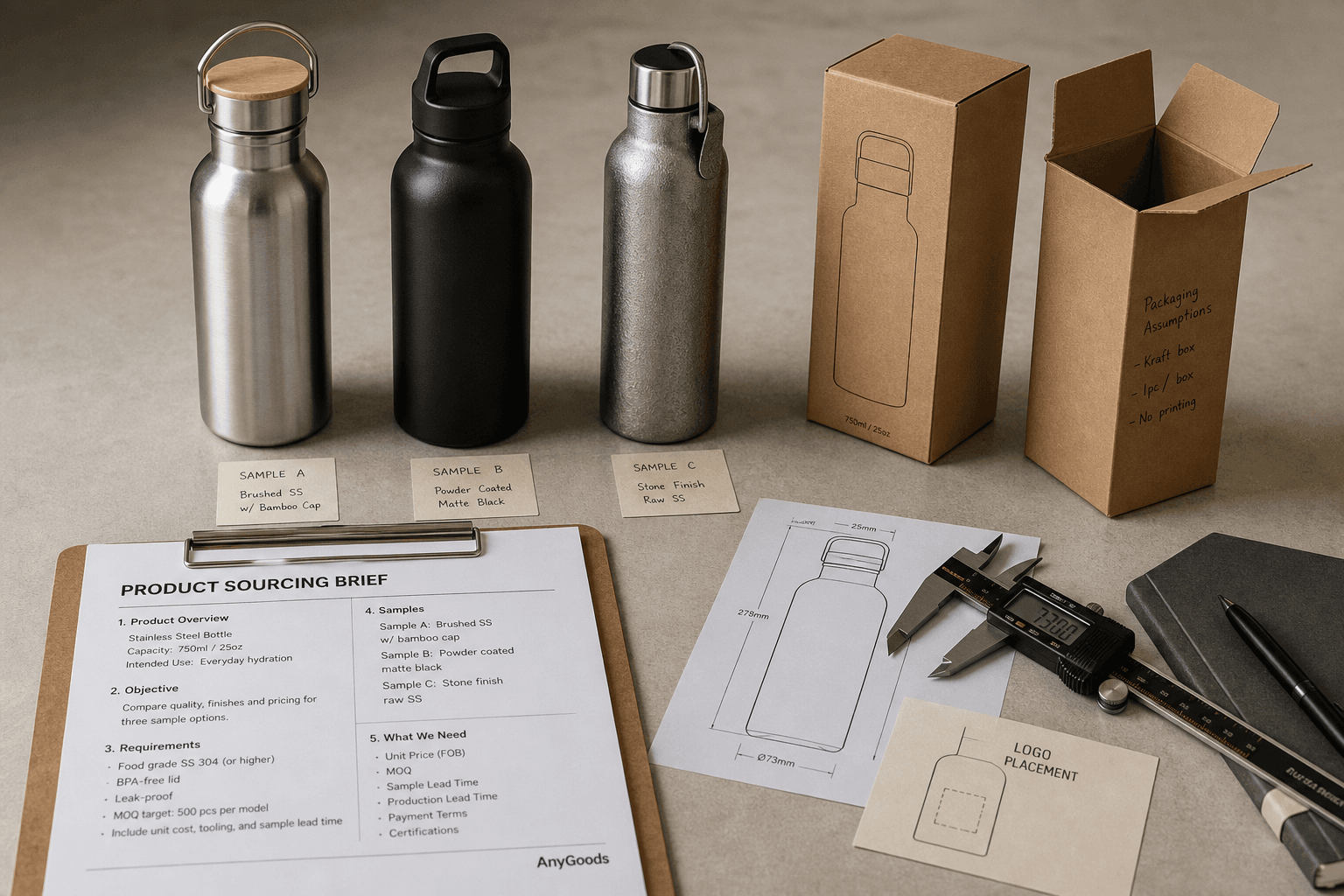
The frustrating part isn't sending a weak sourcing request; it's realizing later that tidy quotes hide different assumptions, so the cheapest line can't support a real decision. Comparable replies come from a normalized brief that fixes what's mandatory, separates suggestions, and makes every supplier price the same boundary, because otherwise numbers only pretend to match. Begin with where the product will be sold, who it's for, and any claims already decided, because those details shape packaging, documentation, and what can't be left vague. Imagine a 750 milliliter private-label bottle: one supplier excludes the kraft box, another gives FOB with carton data, and a third has color-based minimums that reshape the order. If your product is still undefined, screen capabilities first, then send the full brief to serious candidates; you'll get fewer casual replies, but more decision-ready ones. Before choosing, ask what starts lead time, what's excluded, and how defects are judged. A better brief won't remove uncertainty, but it turns hidden risks into visible tradeoffs.
Decide what is fixed before you ask for prices
Before sending the brief, decide three things.
First, what is mandatory now. These are the details that would change the product, route to market, or economics if they moved. A must-fit dimension, retail packaging format, required finish, or stated sales market belongs here.
Second, what is open to supplier recommendation. This is where a supplier can actually add value. Material grade alternatives, decoration method, or carton optimization often belong in this group.
Third, what commercial boundary you want suppliers to quote on. If one factory prices EXW and another prices FOB, you don't yet have a price comparison. You have two different boundaries pretending to be one number.
That distinction matters on the import side too. CBP's guidance makes clear that importers are responsible for exercising reasonable care on classification, valuation, and related import decisions (CBP reasonable care guidance). In other words, composition, construction, and origin are not details to sort out later after you fall in love with the cheapest quote. Where classification is genuinely uncertain, CBP's binding ruling program exists for prospective transactions (CBP binding ruling program).
That does not mean the factory should act as your customs adviser. It does mean your brief should ask the supplier to state the material, construction, and proposed country of manufacture assumed in the quote. Without that, you cannot compare landed economics sensibly. For a deeper look at that comparison, How to compare manufacturing quotes beyond the unit price is the relevant next read.
The fields that make supplier replies comparable
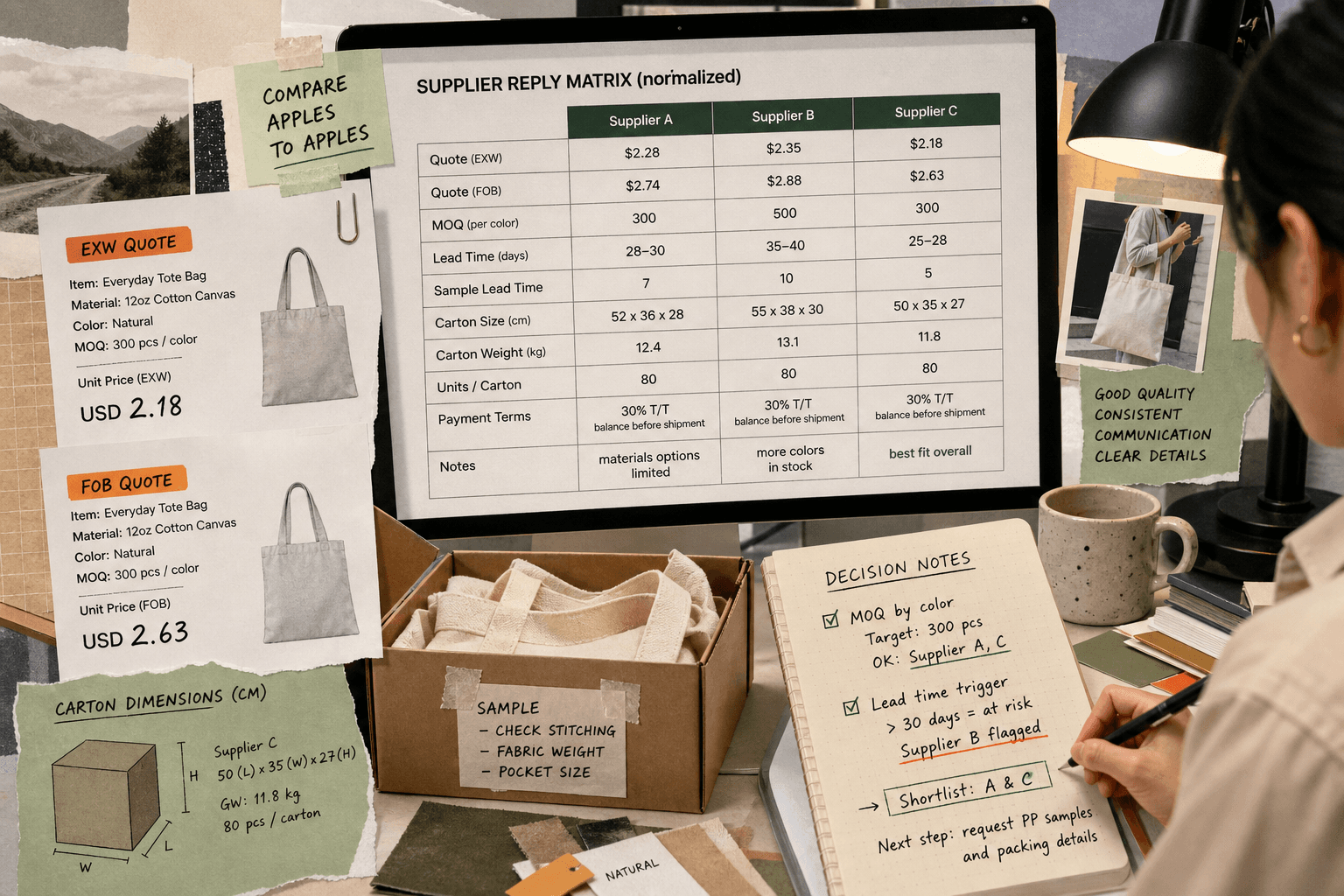
A useful template forces suppliers to respond in a standard format. The exact layout can vary, but the fields should not.
Ask every supplier to answer the same set of points:
- product name, SKU, and brief version
- product description and intended use
- sales market or markets
- intended user or age grading
- materials and material grades
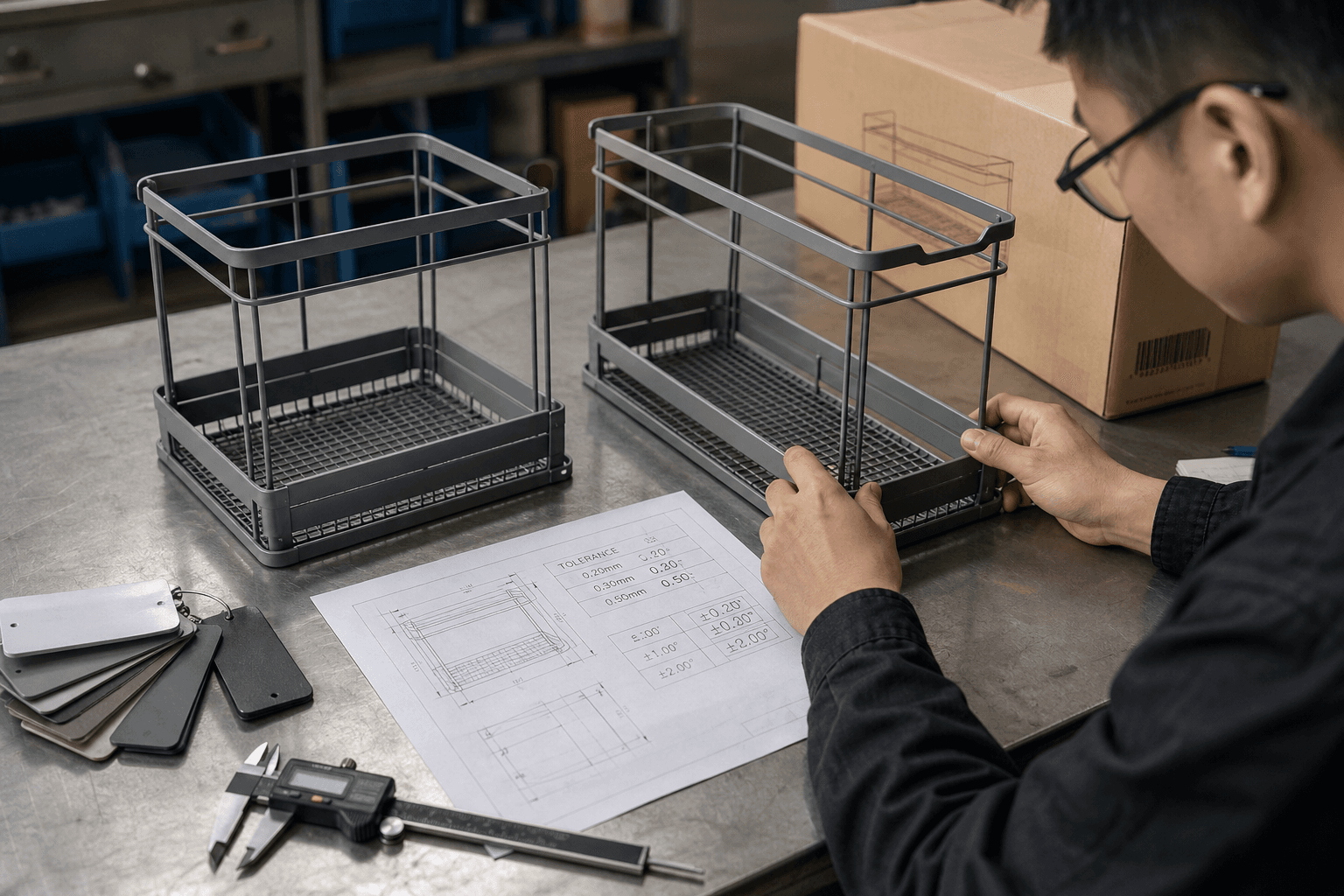
- dimensions, weight, and any critical tolerances
- finish, color, and decoration method
- packaging at unit, inner, and master-carton level
- quantity breaks for quotation
- quote basis such as EXW or FOB
- unit price by quantity tier
- tooling or NRE shown separately from unit price
- sample cost and sample lead time
- production lead time and what starts that clock
- MOQ by SKU, color, and variation
- proposed country of manufacture
- inspection stage and acceptance basis
- assumptions, exclusions, and open questions
The last line is where many expensive surprises hide. If a supplier does not state assumptions and exclusions, ask again. Politely, if you're feeling generous.
Worked example 1: a private-label bottle with three very different quotes
Say you sell outdoor accessories and want a 750 ml stainless bottle under your own brand.
A vague brief might read like this:
“750 ml bottle, black, logo, premium quality, MOQ 1,000.”
That will get replies. It will not get comparable replies.
A better brief gives suppliers the same frame:
Sales markets: U.S. and EU.
Use: general-use drinkware, not marketed for children.
Body material: supplier must state exact stainless grade proposed.
Finish: matte black powder coat or equivalent; supplier to disclose process.
Decoration: one-color exterior logo; supplier to state print method and setup charge.
Dimensions: target height and diameter range; cap must fit listed thread style or approved equivalent.
Packaging: individual kraft box, no plastic window; supplier to provide unit, inner, and master-carton dimensions and weights.
Quantity breaks: 1,000 / 3,000 / 5,000 units.
Quote basis: provide both EXW and FOB.
Quality criteria: no visible coating chips, scratches, or print defects at the agreed inspection distance under normal lighting; supplier to describe leak-test method.
Response format: tooling, sample cost, packaging cost, and any test cost itemized separately.
Now imagine three hypothetical replies.
Supplier A quotes on 304 stainless, gives an EXW price only, and notes later that the individual box is extra.
Supplier B quotes a slightly higher unit price, states 304 stainless, includes FOB pricing, discloses the powder-coat process, and provides complete carton data.
Supplier C shows the lowest price at 5,000 units, but the MOQ applies per color and the quoted packaging excludes the kraft box.
At this point, the right question is not “Which unit price is lowest?” It is “Which quote fits the order I can actually place?”
Here is a simple hypothetical comparison using only the information above:
| Supplier | Quantity used for decision | Hypothetical unit price | Packaging add-on | Quote basis | Effective note |
|---|---|---|---|---|---|
| A | 1,000 | $4.80 | $0.35 | EXW | Box not included; freight still separate |
| B | 1,000 | $5.10 | Included | FOB | Higher unit price, clearer boundary |
| C | 1,000 | $4.60 | $0.40 | FOB | MOQ applies per color |
These numbers are illustrative, not benchmarks. The point is the decision note.
If you need one black bottle, Supplier C may still be viable. If you need two colors split 500/500, its MOQ rule changes the real order structure. If your team wants to compare freight-ready costs quickly, Supplier B may be easier to evaluate because the quote boundary and carton data are already clear. If cash is tight and you only want to test one color at 1,000 units, the packaging inclusion and MOQ-by-variation may matter more than the nominal lowest unit price.
That is why a sourcing brief should force suppliers to show MOQ by variation, not just total MOQ. If that is the sticking point in your first PO, Minimum order quantities: negotiate a first order you can afford to learn from is the decision guide you want beside this one.
Quality language that changes a decision
“AQL accepted” is not an acceptance criterion. It is shorthand for a sampling framework, and an incomplete one at that.
ISO 2859-1 covers sampling procedures for inspection by attributes (ISO 2859-1). Useful, yes. Magical, no. It does not tell your supplier what counts as a major defect on your bottle, what finish variation you will tolerate, or whether inspection happens inline or pre-shipment.
Your brief should name what will be inspected and what the result changes.
For the bottle example, that could be:
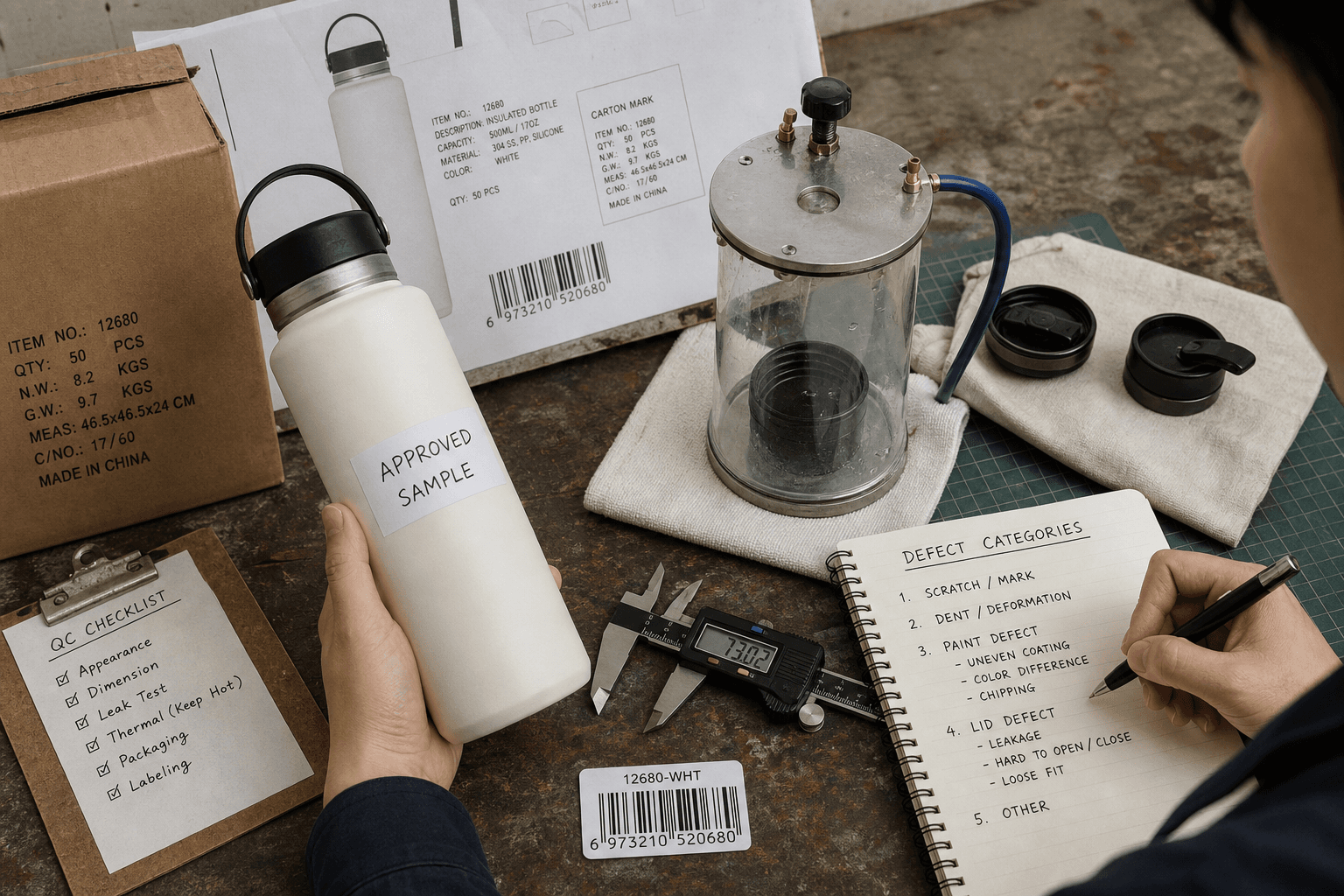
- cosmetic inspection for chips, scratches, print registration, and color consistency
- leak test method and duration to be described by supplier
- dimension check on height, diameter, and cap fit
- packaging pass or fail based on scuffing, crush risk, and barcode readability if used
- inspection stage: pre-production sample approval, then pre-shipment inspection on bulk goods
Now the next supplier call becomes concrete. Ask, “Show me how you define a coating defect that fails inspection,” not “How is your quality?” The answer changes your risk assessment immediately.
For example, if Supplier A says minor coating blemishes near the base are acceptable and Supplier B says they are classified as defects under the agreed visual standard, those are not equivalent quality plans even if both mention AQL.
Worked example 2: a children's craft kit for the U.S.
Now change category, because this is where generic templates usually break.
Imagine you sell a private-label craft kit for ages 6+ in the U.S. A broad brief like “kids' craft set, custom packaging, MOQ 2,000” is not enough to get usable replies.
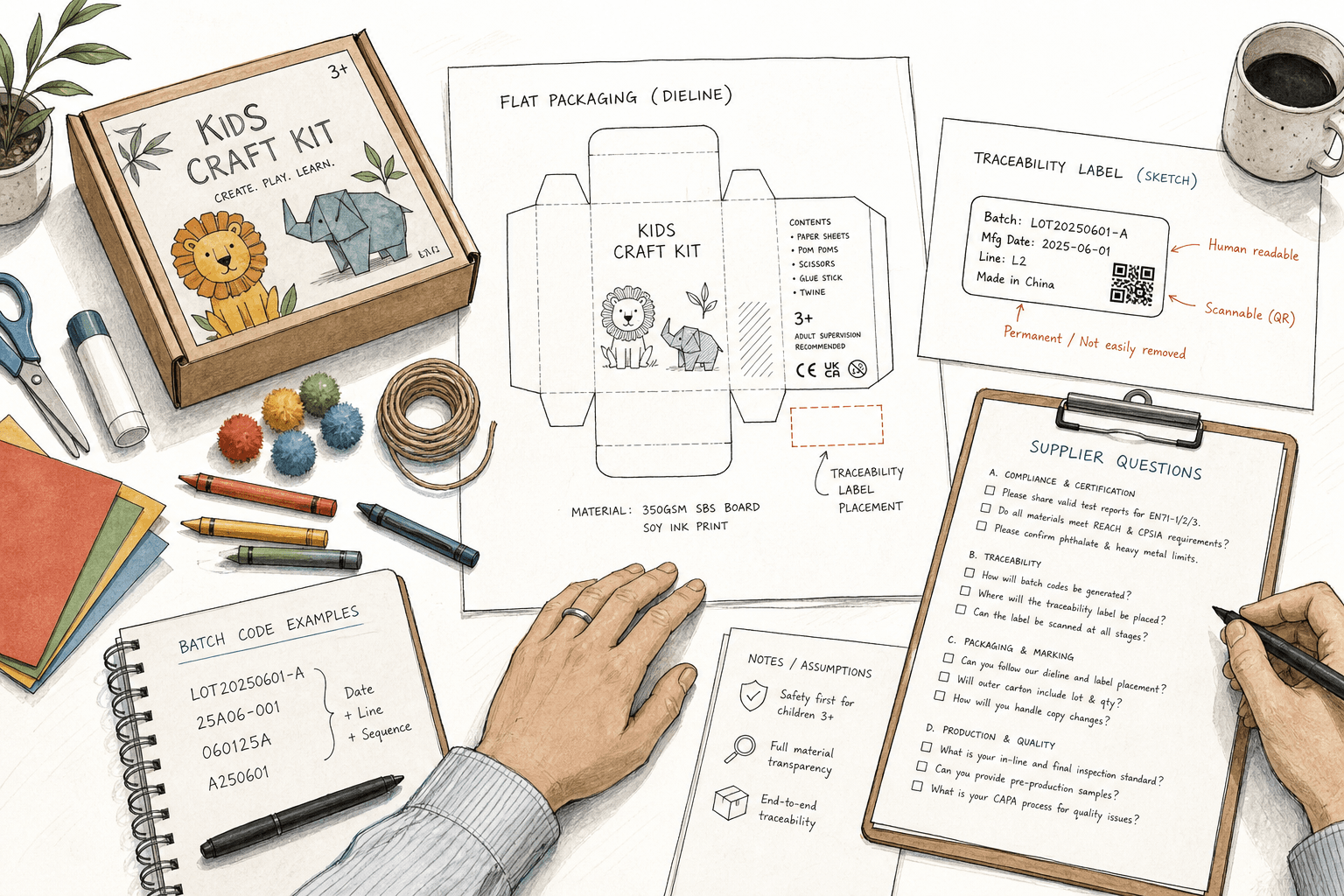
A better brief states that the product is intended for children 12 and under, sold in the U.S., and asks each supplier to answer the same questions:
- What production site will assemble the finished kit and any subcontracted components?
- What batch or run coding method can be applied to both product and packaging?
- Where can traceability information be placed so it stays visible and legible?
- What component and material details can the factory provide for certification records?
- What date and place of manufacture data can be captured consistently?
Those questions are not decorative process theatre. They come from actual obligations that may apply to children's products, including tracking label information and certification records where the law requires them (CPSC tracking label guidance; CPSC Children's Product Certificate guidance).
Notice what changed from the bottle example. The recommendation is not just “add more detail.” It is “add the detail that determines whether the quote can lead to a compliant product.” A supplier with a low price but vague answers on traceability, subcontracted parts, or factory records is not giving you a comparable quote. It is giving you a future problem at a discount.
When to use a shorter brief instead
There is one fair objection to all this detail: a more structured brief can reduce reply volume.
Yes. Some suppliers will not answer carefully structured requests, especially if they are used to fishing expeditions from buyers who send one sentence and a blurry photo. That is not always a loss.
Still, there are cases where I would choose a shorter screen first. Use a lighter first contact when the product is still fuzzy, when you are comparing stock product versus private label versus custom development, or when you have not yet decided which features justify custom work. In that case, ask only for capability, broad MOQ range, likely lead time, and whether the supplier can serve your intended market.
Then send the full normalized brief to the shortlist.
That is also the right moment to settle whether you are buying an existing base product with branding changes or commissioning real product changes. If that line is still blurred, Private label vs custom manufacturing: decide what needs to be different will save you from writing an ambitious brief for a product that should have been a simpler private-label launch.
What the next supplier conversation should resolve
Once the quotes arrive, your next call should not be a generic introduction. Use it to close the variables still distorting the comparison.
For the first serious call, ask:
- Which material, finish, and packaging assumptions are driving this quote?
- What is included in the quoted price, and what is excluded?
- What starts production lead time: deposit, artwork approval, sample approval, or packaging sign-off?
- What is the MOQ by SKU, color, and packaging variation?
- What inspection stage do you propose, and what defect examples would fail inspection?
- What factory or subcontractor details can you provide for origin, traceability, or certification records if needed?
If you want one more decision aid, keep notes in the same categories for every supplier: specification fit, landed cost boundary, MOQ, quality risk, internal workload, lead time, and cash exposure. Not because every decision needs a grand scoring model, but because these are the categories that usually explain why the “cheapest” quote somehow becomes the expensive one.
If you need help turning a product idea into a brief that suppliers can quote on consistently, then comparing those replies through sampling and production, AnyGoods' services or contact page is the relevant next step. That is most useful when the issue is not finding more factories. It is getting the right factories to answer the same question.
For today, the next move is simpler: take your current RFQ, add the fields that change quote comparability, and resend it to three serious suppliers rather than ten optimistic strangers.
Product sourcing brief
Turn a product idea into a brief manufacturers can evaluate. Replace the example with your own requirements.
Send the same version to each shortlisted supplier. Ask them to identify assumptions and exceptions before quoting.
See a completed example
- Product and intended use
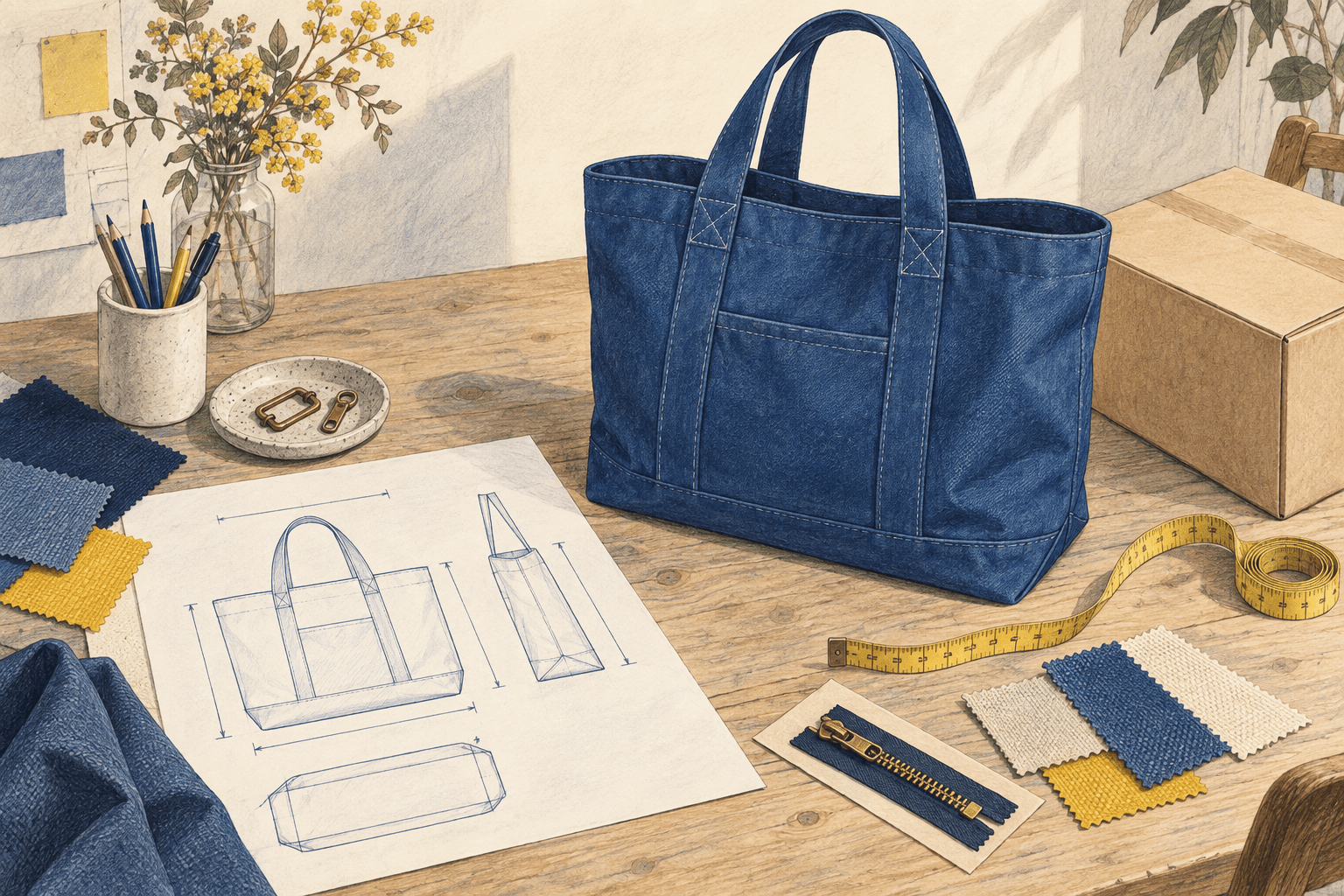
- Hypothetical example: An everyday tote for carrying a laptop and groceries. Initial market: United States.
- Specification and references
- Define dimensions, fabric weight, construction, handle length and required performance. Attach a drawing and reference images; identify which details are essential.
- Quantity and target economics
- Request comparable quotes at the quantities you can realistically finance. Specify whether the target is factory price or landed cost.
- Materials and packaging
- List material preferences, hardware, labels, carton requirements and any substantiated product claims. Ask the factory to flag substitutions.
- Samples and acceptance
- Define what the sample must prove: dimensions, construction, comfort and performance. Agree the sample cost, process and review timing.
- Market requirements
- Name the destination market and intended user. Confirm applicable safety, labeling and testing requirements with qualified sources for this product.
- Timing and commercial questions
- Give the desired launch date, ask for milestone estimates, and confirm payment terms, tooling ownership, inspection and change approval.
Make your own brief
Your entries stay in this tab. Download before leaving; they are not saved or sent to AnyGoods.
Sources & further reading
- Tracking Label Business Guidance | CPSCcpsc.gov
- Children's Product Certificate | CPSCcpsc.gov
- What Every Member of the Trade Community Should Know About: Reasonable Care | CBPcbp.gov
- Binding Ruling Program | CBPhelp.cbp.gov
- ISO 2859-1:2026 Sampling procedures for inspection by attributesiso.org
- Made in USA Rule | Federal Trade Commissionftc.gov
- EU GPSR business guidance noticeeur-lex.europa.eu
Published by AnyGoods Editorial. Examples are illustrative unless a source is identified. Updated .