You have a product in mind, a folder of reference images and a rough idea of what it should cost. You send the pictures to several factories. One asks for drawings. Another offers an existing product. A third replies with a price that looks appealing until you realize it excludes the packaging you wanted.
The problem starts before the quote. Each supplier has answered a different version of your request.
Sourcing your first product works better when you turn the idea into a small set of decisions that a manufacturer can evaluate: what must be made, what can change, how you will judge a sample and what the finished order needs to cost. The brief can evolve. It just needs to be specific enough that the next conversation produces evidence rather than another guess.
Decide what has to be different
Start with the difference a customer would notice and value. That tells you whether you need an existing product, a private-label variation or custom development.
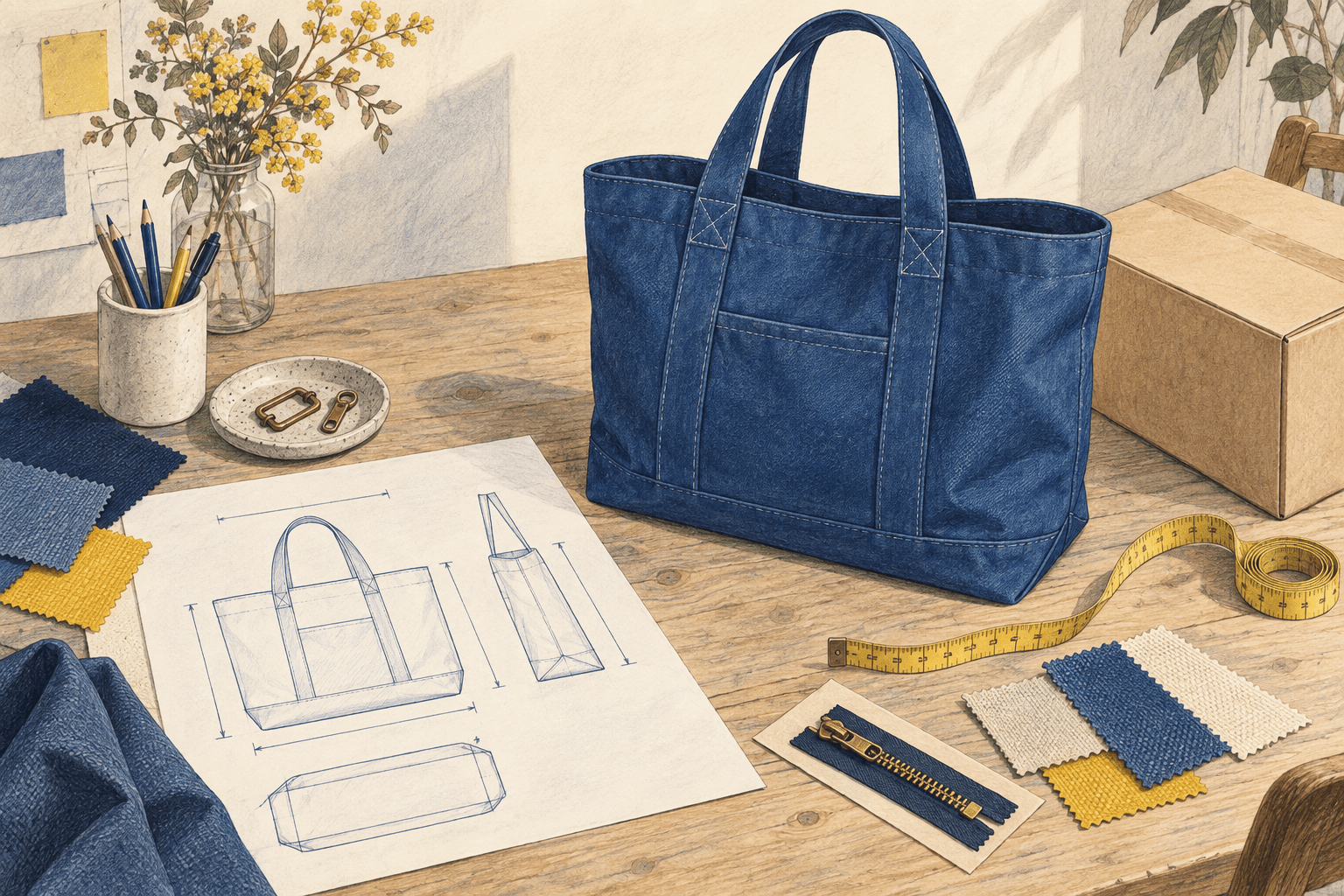
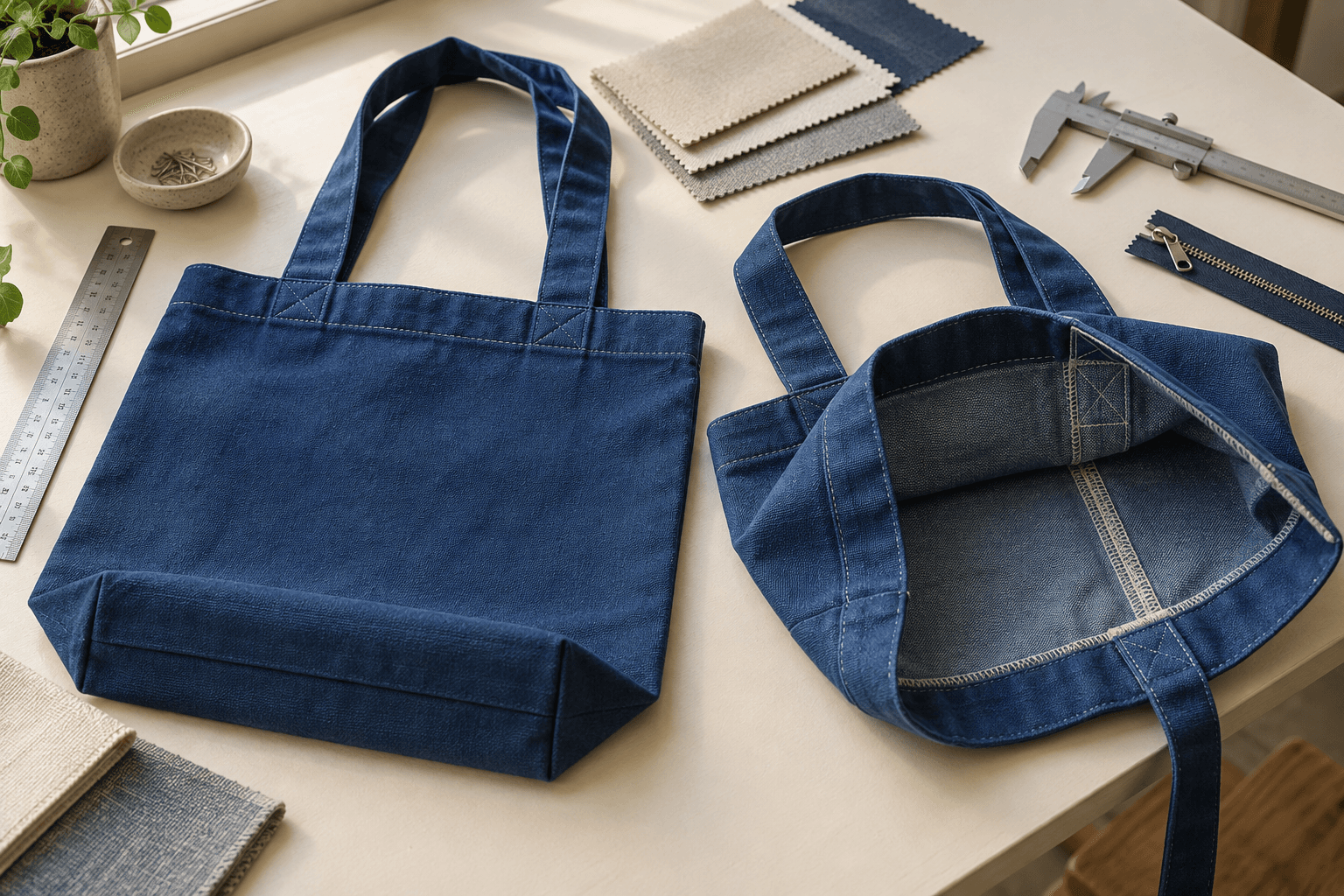
Imagine a first-time founder launching a canvas tote. The idea is a bag that carries a laptop comfortably and stands upright when placed beside a desk. The logo is a branding choice. The structure that helps the bag stand and the handle construction that makes it comfortable are product requirements.
An existing factory design might already meet those requirements. If it does, changing the decoration and packaging could be a sensible first step. If every available sample collapses when empty, the construction needs development. Calling both assignments “a custom tote” hides a meaningful difference in work.
Write down what must be true for the product to earn its place. Keep aesthetic preferences separate from non-negotiable functions. A manufacturer can propose an alternative material more intelligently when it knows whether your priority is appearance, stiffness, weight or durability.
Read the video transcript
Before you ask a factory for a price, explain what your product needs to do. Otherwise, different suppliers may be quoting completely different assignments. Imagine launching a canvas tote that stands upright beside a desk. A logo changes its appearance. The construction that keeps it standing changes the product. Specify dimensions, materials, quantity and packaging. Mark any unanswered questions. Ask each manufacturer to identify its assumptions, rather than quietly filling in the gaps. A cheaper quote may exclude packaging or use different hardware. Compare the same order, then investigate freight and destination costs before deciding what you can afford. Check whether the tote stands, carries its intended load and matches the brief. Record the sample version. These observations do not replace applicable product testing. Before production, confirm the specification, approved sample and milestones. Choose an order your cash and demand evidence support. Your next move is a clearer brief.
Give the factory inputs it can use
A reference photograph communicates appearance. It rarely communicates enough to manufacture the product consistently.
For the hypothetical tote, the brief should describe the intended load, external dimensions, internal compartments, handle length, material preferences and packaging. Include a drawing or annotated reference showing which details matter. Where you do not know the right construction, say so and ask the factory to propose options with their tradeoffs.
Use wording that invites a concrete reply: “The bag needs to stand on a flat surface when empty. Please explain your proposed construction and show a sample demonstrating it.” That is easier to evaluate than “premium quality with a sturdy feel.”
The destination market and intended user belong in the brief too. They can change the questions you need to investigate before ordering. The CPSC business education library organizes guidance by product and business type, including testing, certification and labeling. Use the applicable guidance to identify questions for your particular product; do not treat a factory’s general claim of compliance as an answer to every requirement.
A useful brief also says which decisions are still open. Asking a supplier to recommend a material is reasonable. Letting each supplier silently choose a different material makes the quotations difficult to compare.
Build a shortlist around capability
Decide who will manage this work as well as who will make the product. Our sourcing agent versus buying direct guide compares the two routes by quote quality, internal workload and cash exposure.
Once your brief is clear, use our guide to finding and comparing product manufacturers to test each factory against the same capability, sample and order requirements.
A country is a search boundary, not a qualification result. The next question is whether a particular supplier can make this product at your likely order size and work through the unresolved details.
Ask which processes the business performs itself and which it subcontracts. Request examples that are relevant to the construction you need. A factory that makes simple promotional bags may or may not be the right partner for a structured everyday tote. Similar-looking products are a reason to investigate, not enough evidence to approve an order.
Pay attention to how the supplier handles your questions. Does it identify a weak point in the design? Does it distinguish a confirmed lead time from an estimate? Can it explain why your requested quantity affects its quotation?
You can manage this work directly if you have the time and product knowledge. Outside sourcing support becomes useful when comparing capabilities, following up and resolving specifications would otherwise stall the project. The decision is about the work you need covered, not a rule that every first-time founder needs an intermediary.
Compare the same order before comparing prices
Ask each shortlisted supplier to quote the same specification, quantities and packaging. Record sample charges, tooling or setup costs, the delivery basis, payment terms and exclusions separately.
Suppose, purely as an illustration, one supplier quotes $8 per bag including individual packaging and another quotes $7.60 without it. The difference is not yet a saving. You need the missing packaging cost and any effect on labor, carton dimensions and shipping before deciding whether the second offer is better.
Keep factory price distinct from landed cost. For a cross-border order, your planning may need freight, insurance, customs-related charges, handling and other destination costs. Obtain current information for the actual goods and route rather than borrowing a percentage from an unrelated product.
CBP’s guidance for new importers points businesses toward entry, classification and other import requirements. That is a starting resource for a US-bound order, not a live duty quote. Resolve product-specific import questions before using an assumed total to set your retail price.
Use the supplier quote comparison worksheet to keep the assumptions beside the numbers. A model is most helpful when it makes an unknown visible.
Make the sample answer a decision
Ordering a sample without a review plan often leads to a vague verdict: “Looks good.” Decide what it needs to prove before it arrives.
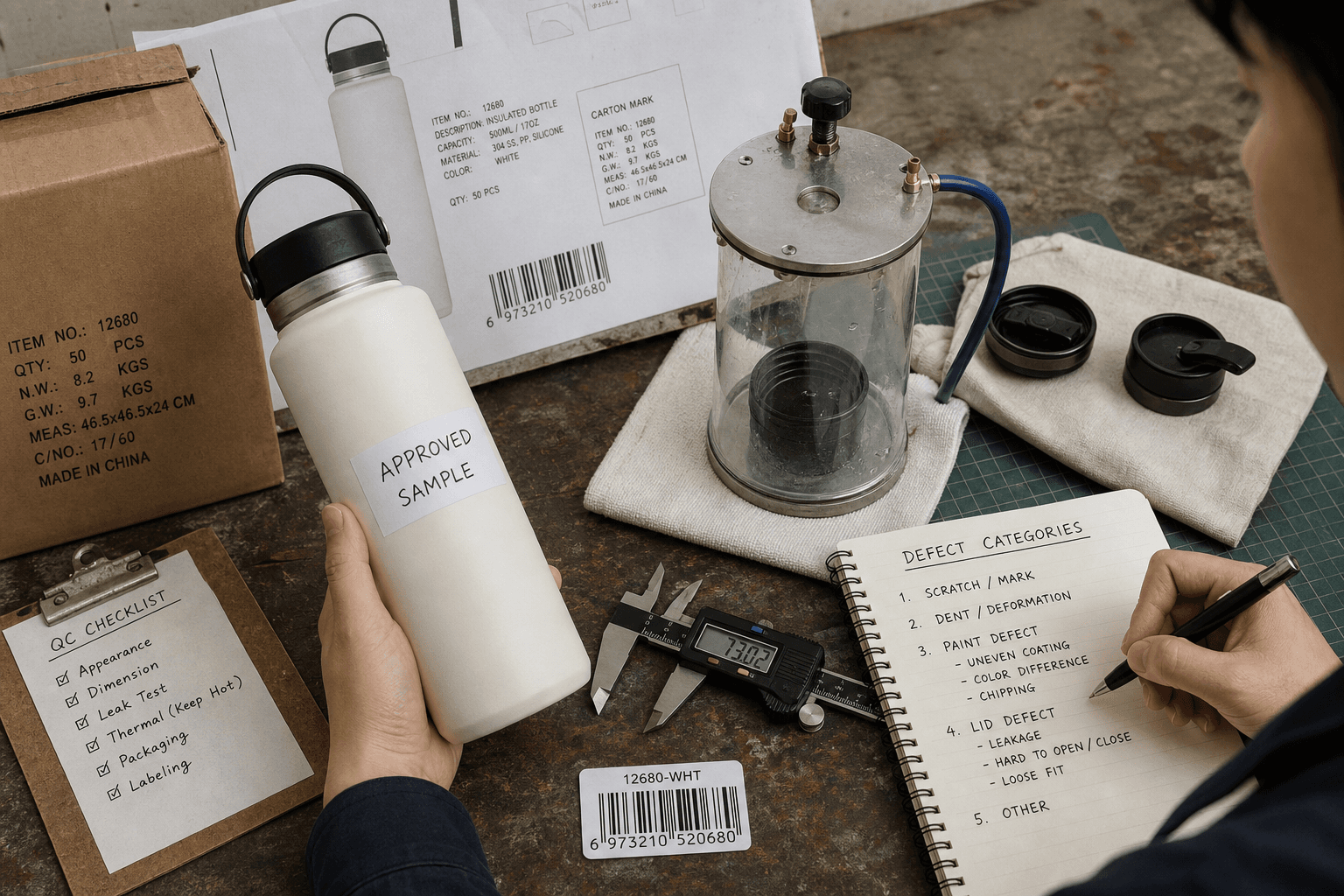
For the tote, compare the dimensions with the brief, inspect handle attachment, load the bag for its intended use and check whether it stands as required. Photograph what you observe and record the sample version. A change in fabric or reinforcement can affect several of those results, so approval should identify the actual sample and specification.
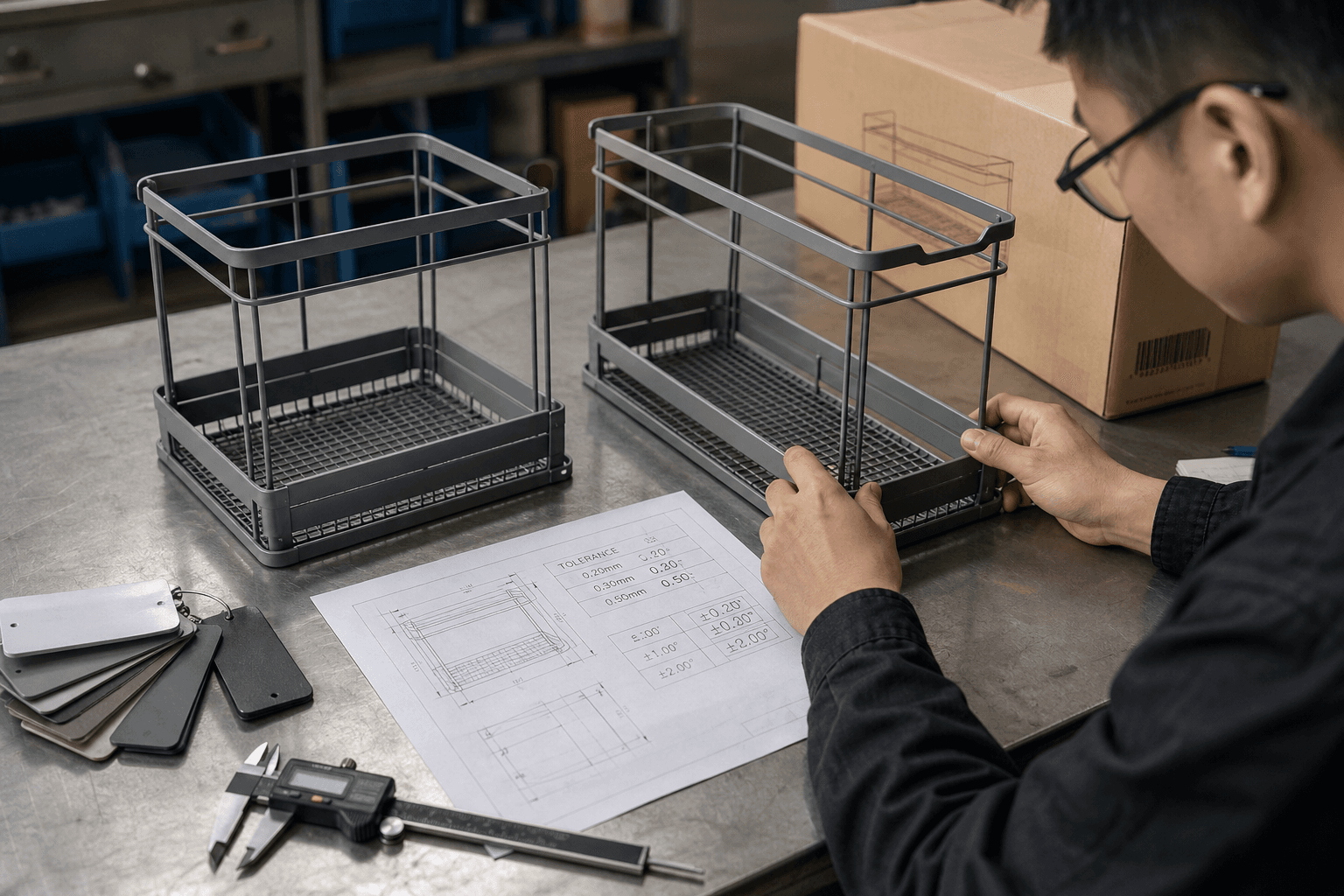
Consider a second hypothetical product: a desktop organizer. A sample might have the right finish and dimensions but rock when placed on a flat desk. A photograph would miss the problem. A simple stability review catches it and gives the supplier a specific issue to resolve.
These are development observations, not substitutes for any applicable formal testing. Use them to decide whether the design is ready, needs revision or should be reconsidered. Keep the sample review worksheet with your notes so the next version can be judged against the same requirements.
Place an order that leaves room to learn
Before committing to production, bring the decisions together: the specification, approved sample, quantity, packaging, milestones, inspection plan, payment terms and process for approving changes.
Ask the supplier to separate sampling, material preparation, production and shipment in its timeline. A single arrival estimate can hide dependencies that matter to your launch. Build your own calendar around the unresolved steps and confirm the receiving requirements with your fulfillment partner.
The first order should also fit your cash position and confidence in demand. A lower unit price on a much larger order does not automatically create a better business. Compare the extra inventory commitment with what you have actually learned about the product and likely customers.
Your next move is a brief, not a bigger supplier list. Complete the specification you can support, mark the open questions and decide what the first sample must prove. If you want help turning that brief into a qualified shortlist, talk to AnyGoods about sourcing your product. Bring the references, quantities and timing you know; the remaining questions are part of the work.
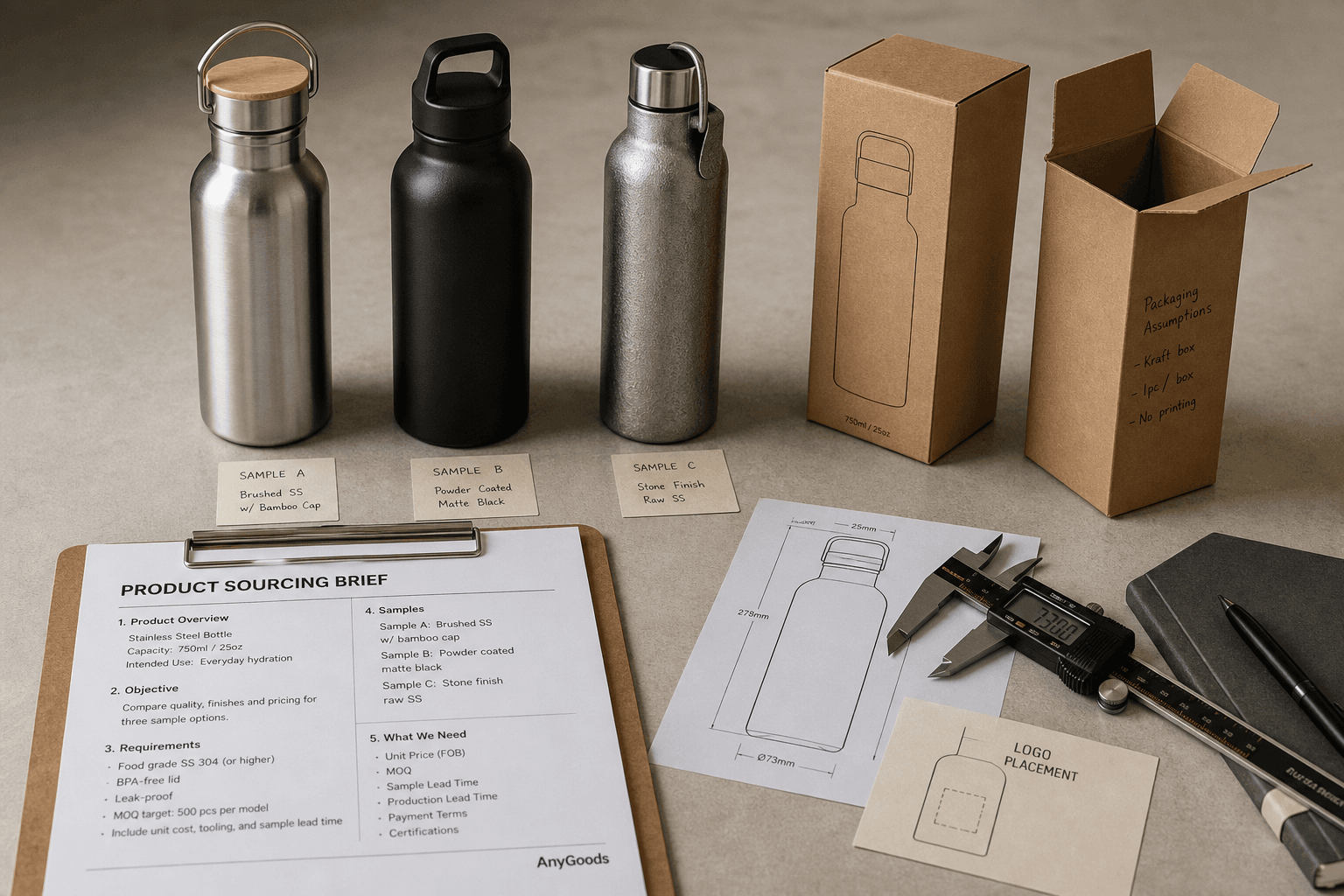
Product sourcing brief
Turn a product idea into a brief manufacturers can evaluate. Replace the example with your own requirements.
Send the same version to each shortlisted supplier. Ask them to identify assumptions and exceptions before quoting.
See a completed example
- Product and intended use
- Hypothetical example: An everyday tote for carrying a laptop and groceries. Initial market: United States.
- Specification and references
- Define dimensions, fabric weight, construction, handle length and required performance. Attach a drawing and reference images; identify which details are essential.
- Quantity and target economics
- Request comparable quotes at the quantities you can realistically finance. Specify whether the target is factory price or landed cost.
- Materials and packaging
- List material preferences, hardware, labels, carton requirements and any substantiated product claims. Ask the factory to flag substitutions.
- Samples and acceptance
- Define what the sample must prove: dimensions, construction, comfort and performance. Agree the sample cost, process and review timing.
- Market requirements
- Name the destination market and intended user. Confirm applicable safety, labeling and testing requirements with qualified sources for this product.
- Timing and commercial questions
- Give the desired launch date, ask for milestone estimates, and confirm payment terms, tooling ownership, inspection and change approval.
Make your own brief
Your entries stay in this tab. Download before leaving; they are not saved or sent to AnyGoods.
Sources & further reading
Published by AnyGoods Editorial. Examples are illustrative unless a source is identified. Updated .