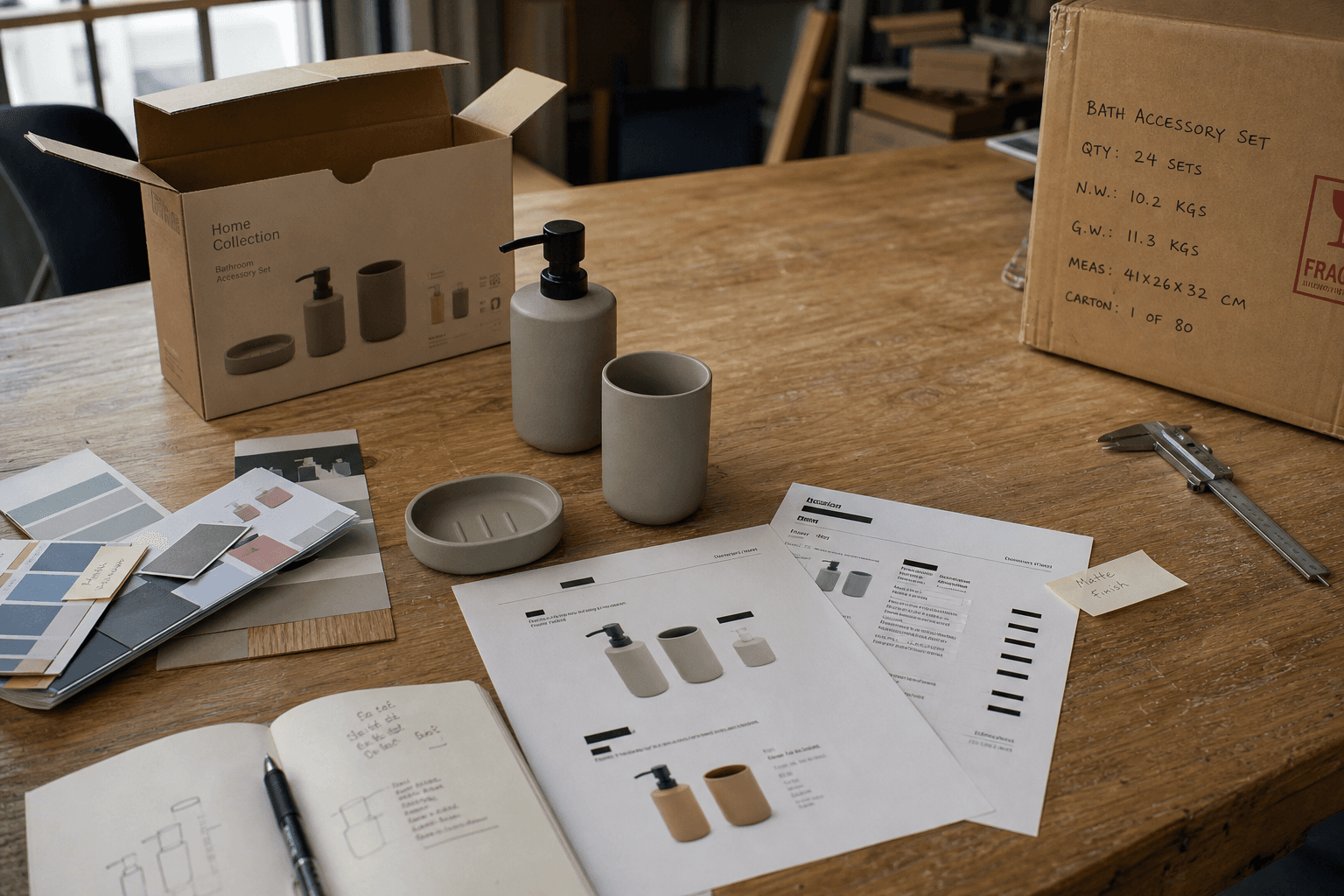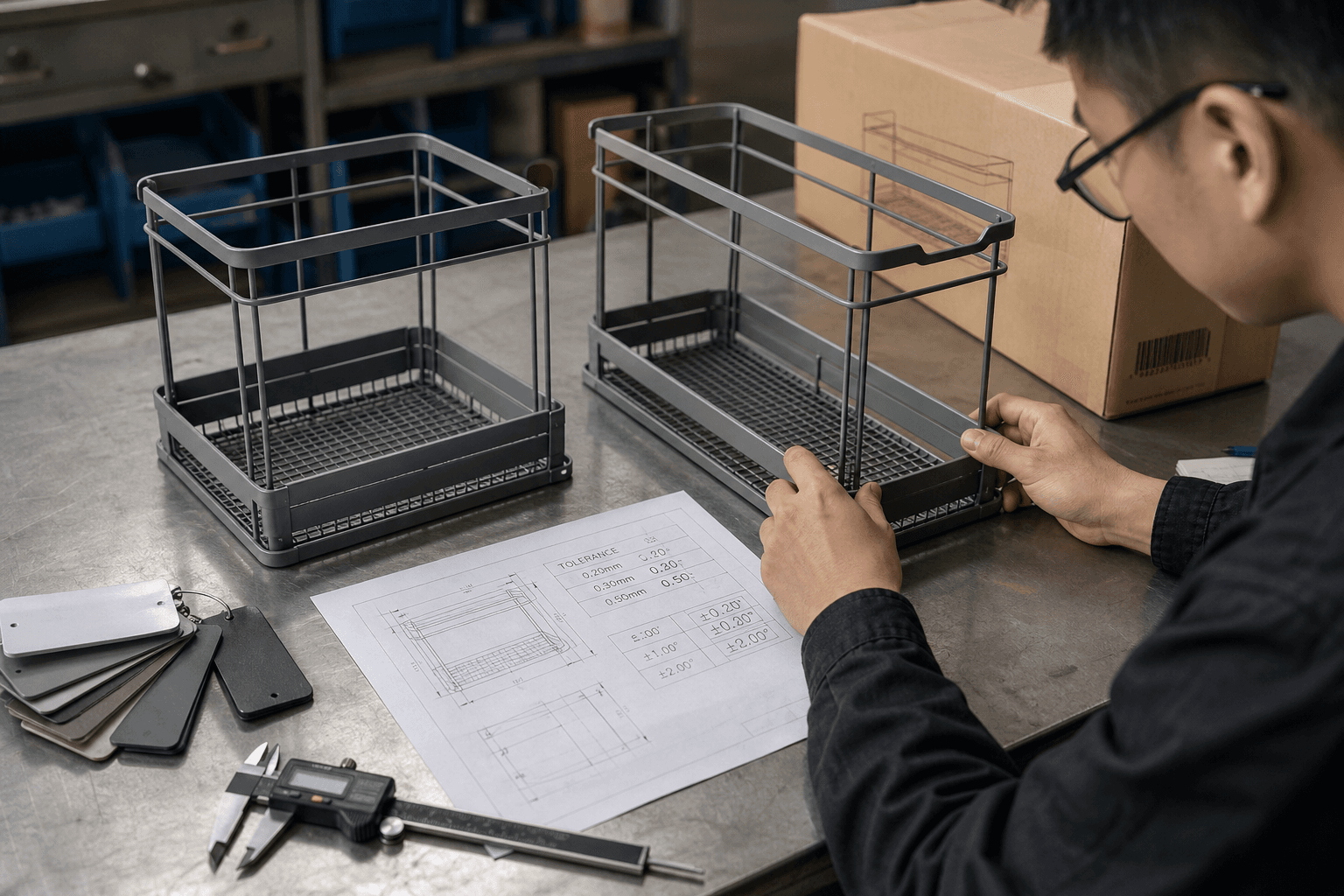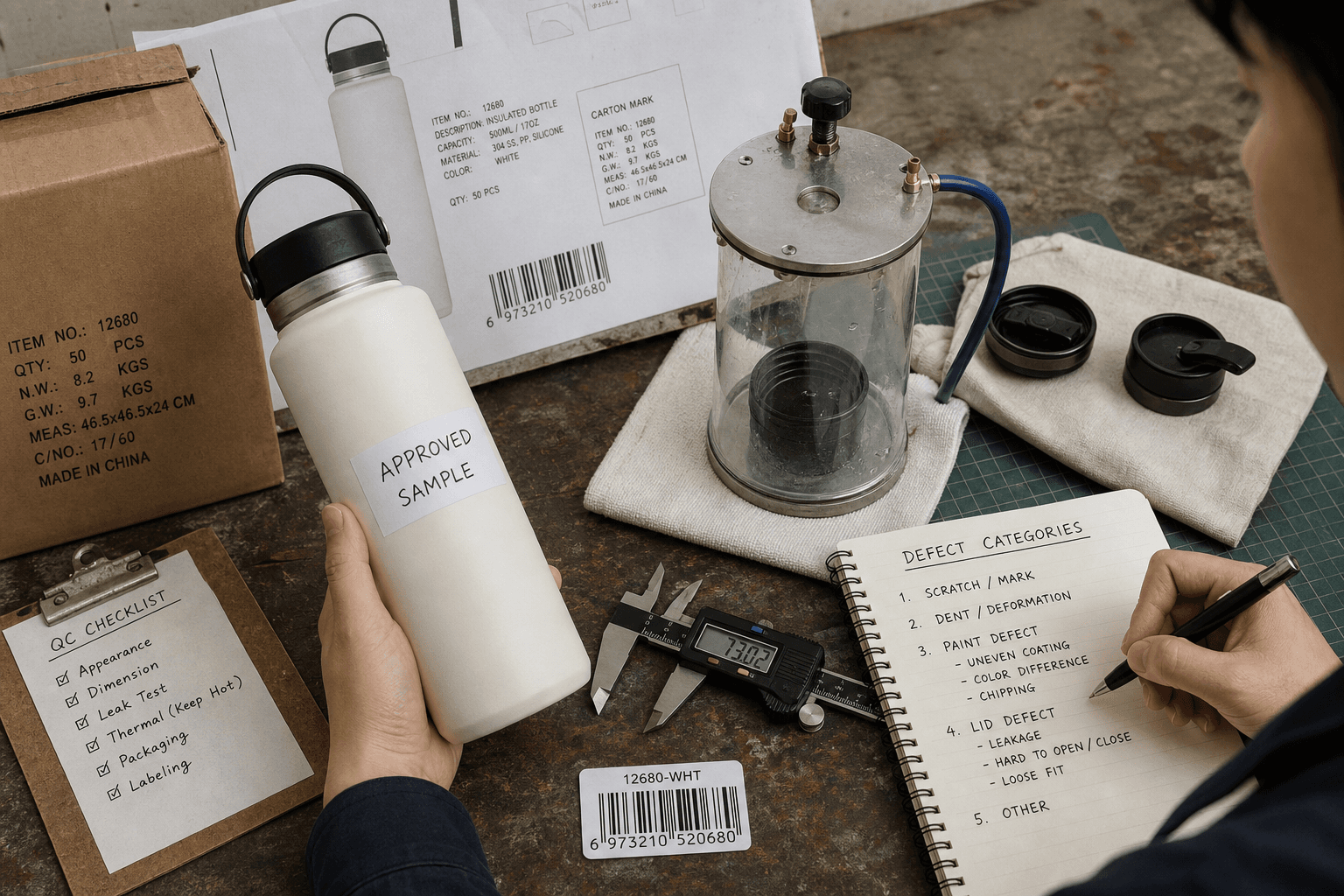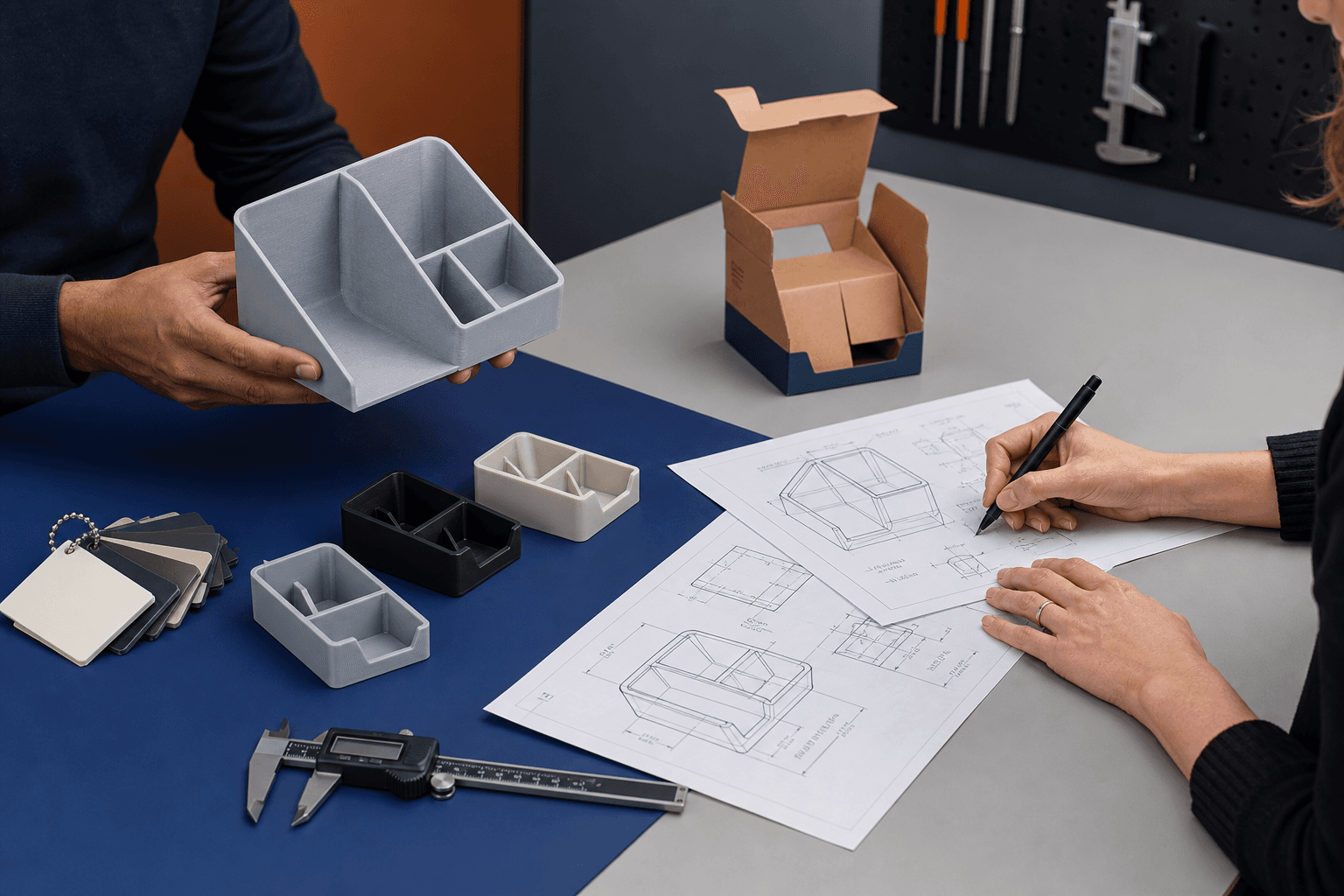
The expensive mistake is usually not a bad factory. It’s paying for tooling while "approved sample" still means three different things.
The founder means, "I like the product." The supplier means, "We can start making the tool." Operations means, if anyone asked, "We haven't settled what counts as acceptable in bulk production." Then the first shots arrive, the part rocks on the table, the carton fit is tight, the label is wrong for the market, and everyone goes looking for the email where this was supposedly clear.
That is the real problem in the prototype to production process. Before you authorize tooling, decide what a conforming production product is in writing. If that definition is still fuzzy, a mold will not remove the risk. It will just turn it into sunk cost.
My recommendation is simple: don't approve tooling for a custom product until you have four things settled. First, a revision-controlled production specification. Second, measurable tolerances and test methods for the characteristics that matter. Third, written ownership and change-control terms for tooling and product files. Fourth, a defined approval path from tool-off sample to pilot to bulk production. I'd choose differently only if you're buying an existing product with minor branding changes, or if the tooling is cheap enough that you are deliberately using it as an experiment rather than pretending it's a launch decision.
If you're still turning an idea into a usable brief, start with how to source your first product. This article is for the moment when a supplier wants a yes or no on tooling and you need that yes to survive contact with production.
A prototype can prove the concept and still fail the production handoff
A prototype answers some questions well. Does the shape work? Does the product solve the use case? Does it look close enough to the price point? Useful questions.
It often does not answer the one that matters before tooling: can this exact product be made repeatedly, with the right material, finish, dimensions, labeling, and packaging, at an acceptable failure rate?
That distinction is formal in regulated industries. FDA guidance on design controls separates verification, validation, and design transfer, and treats production specifications as something that must be defined before commercial manufacture begins [FDA PMA quality system guidance]. Most consumer goods are not subject to FDA design-control rules. The logic still applies. A supplier can't reliably make an undefined product, and a buyer can't fairly reject one either.
For molded plastic parts, the gap between prototype and production can be especially expensive. ISO's current summary for molded-part tolerances states that dimensional outcomes depend on the material, part design, tool layout, and processing conditions [ISO 20457 on tolerances and acceptance conditions]. In plain English, a 3D print proves geometry. It does not prove how an injection-molded part will shrink, warp, eject, stack, or show a gate mark.
So the pre-tooling question is not, "Do we like this prototype?" It's, "Have we defined the production version tightly enough that a factory can make it and we can inspect it?"
Read the video transcript
The costly problem usually isn't a bad factory. It's saying yes to tooling while your team and supplier each mean something different by an approved sample. A prototype can show the shape works and the product feels right, but it may not show whether bulk production can repeat fit, finish, packaging, and labeling reliably. Before tooling, define the production version in writing: controlling revisions, the few dimensions and checks that matter, ownership terms, and how approval moves onward. Imagine a molded desk organizer. A cheaper quote sounds attractive, but if stacking, warpage, gate marks, or carton fit aren't defined, one correction cycle can erase savings. So the next call should pin down resin, critical dimensions, measurement methods, gate location, warpage checks, packaging fit, and any required markings before production starts. That won't guarantee perfection, and simple branded existing products may need less. Still, clear written decisions before tooling usually reduce expensive arguments after first shots arrive.
Lock the spec package before you lock the tool
Start with the controlled document set. If the supplier is building a tool, they need to know which files and standards govern the product. That usually includes the drawing or CAD revision, bill of materials, approved material grades, color standard, finish or texture, assembly method, packaging configuration, artwork, and marking locations.
A photo-marked sample helps, but it doesn't settle conflicts. If the sample says one thing and the drawing says another, which one wins? Ask that question directly. If nobody can answer in one sentence, you're not ready.
A useful supplier note is blunt enough to prevent future theater: "Please confirm the controlling drawing revision, BOM revision, packaging spec revision, and artwork revision for tooling and first-off production. If the sample differs from the drawing, state which governs."
What changes with the answer? If the supplier replies with a clear revision list and asks for signoff on each document, good. If they reply, "We will follow your approved sample," assume you'll be litigating memory later.
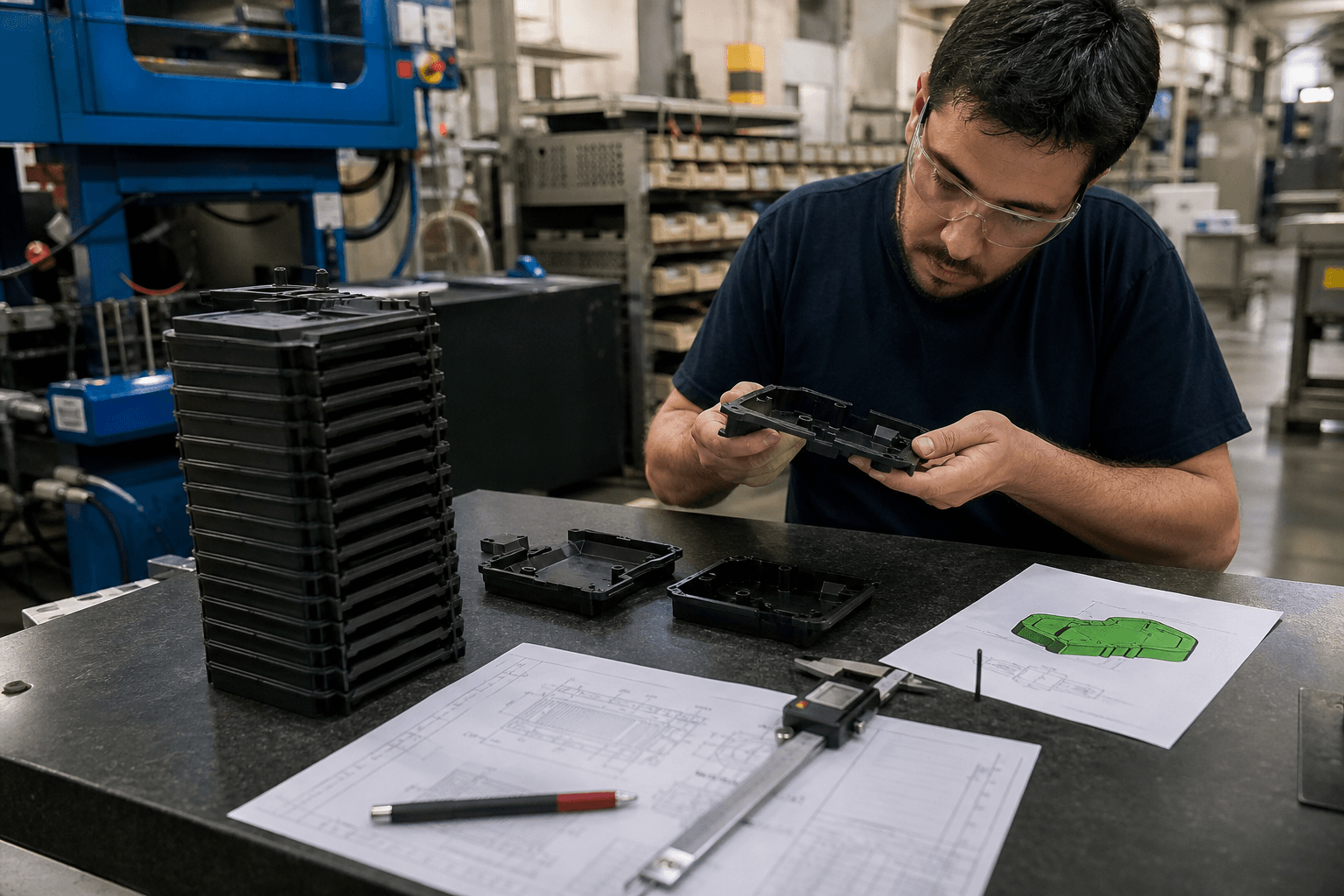
Tolerances are not a courtesy. They are the product.
Most buyers ask for tight tolerances when they mean they don't want sloppy output. That's understandable and not very useful.
Decide which dimensions and attributes actually matter. For a consumer product, that usually means the dimensions tied to fit, sealing, stacking, closure, assembly, stability, or visible alignment. Then define how those will be measured and what result passes. NIST's work on geometric dimensioning and tolerancing makes the basic point well: conformance depends on how requirements are specified and tested, not on a general feeling that a part looks close enough [NIST on testing conformance to GD&T standards].
A workable supplier question sounds like this: "Please mark the critical-to-function characteristics on the drawing, propose a measurement method for each, and state how often they will be checked during production."
What changes with the answer? If the supplier can identify the few dimensions that truly drive fit or function, and can explain how they will measure them, you are discussing production reality. If every line on the drawing is supposedly equally important, or no measurement method is proposed, you are not.
Cosmetics need the same treatment. "No scratches" is not a standard. Define cosmetic zones, viewing distance, and what counts as an acceptable blemish. The front face visible on a product detail page is not the same as the underside nobody sees unless they drop it.
Ownership and change control need plain language, not trust exercises
Tool ownership is commercial, not automatic. If you are paying for molds, inserts, jigs, fixtures, packaging dies, or custom gauges, settle who owns them, where they are stored, how they are maintained, whether they can be moved, and what happens if you change supplier.
Do the same for the CAD files, dielines, artwork, and test methods. Founders often learn too late that "we paid for development" does not necessarily mean "we can take everything to another factory next month."
You don't need legal poetry here. You need specifics. A practical note to settle before payment is: "Please confirm ownership of the mold, inserts, fixtures, CAD, and packaging tooling; location of storage; maintenance responsibility; and the process for approving engineering changes after tool start."
What changes with the answer? If ownership is vague, expect switching cost to be higher than you thought. If change control is vague, expect sample approval to drift without anyone admitting it.
Some labeling and traceability decisions have to be designed in now
This is where teams lose time because the prototype looked fine and nobody wanted to talk about labels yet.
For some products, that is merely untidy. For others, it creates a real market-entry problem.
If the product is a children's product in the US, the CPSC says it must bear permanent distinguishing marks on the product and packaging, to the extent practicable, including information identifying the maker or private labeler and details about production date and batch or run [CPSC tracking label guidance]. If you import into the US, articles of foreign origin generally need country-of-origin marking unless an exception applies [CBP country-of-origin marking guidance]. If you sell consumer non-food products into the EU, the General Product Safety Regulation applies from 13 December 2024 and affects traceability and economic-operator information for products placed on the market, including distance sales [EUR-Lex GPSR guidance].
That does not mean every product needs the same labels, or that GPSR turns every item into a CE-marking exercise. It means you should settle now where required information will appear, how durable it must be, and what production data the supplier will hold behind it.
One caution matters here. Country of origin is not always obvious in a multi-country supply chain. Assembly in one country does not automatically settle the legal answer. If origin marking is not straightforward, you may need more process detail and classification work before finalizing the mark [CBP rules of origin].
Tool-off, pilot, and bulk approval are three different decisions
Buyers often collapse these into one because everyone is in a hurry. Don't.
Tool-off approval asks whether the first output from the tool is close enough to the agreed design to continue, or whether the tool needs correction.
Pilot approval asks whether the product can be made repeatedly under production-like conditions, with acceptable assembly yield, packaging fit, and cosmetic consistency.
Bulk acceptance asks what inspection method will govern lots you are paying for.
AQL-based acceptance sampling can be useful at that last stage. ASQ's summary of ANSI/ASQ Z1.4 explains it as a system for acceptance sampling on lots from a continuing stream [ASQ on Z1.4 and Z1.9 sampling]. Useful, yes. Magical, no. AQL can help you accept or reject a lot. It does not tell you what the product should have been in the first place.
Worked example 1: molded desk organizer
Say you sell a minimalist desk organizer. The prototype is a clean 3D print and the supplier now wants tooling approval for an injection mold.
The sample has done one job: it showed you the shape and layout work. It has not yet proved stackability, warpage control, gate visibility, or carton fit in molded production.
Here is a supplier question set that would actually move the decision:
- "Please confirm the production resin grade and whether the prototype used that exact material or a substitute."
- "Please mark the three dimensions that control stacking and nesting, and provide your proposed tolerance and measurement method for each."
- "Please show the proposed gate location and state whether gate vestige will appear in the primary cosmetic zone."
- "Please define how flatness or warpage will be checked on tool-off samples."
- "Please confirm that packaging fit will be tested using the production carton spec, not a loose mockup."
Now imagine two hypothetical quotes.
Supplier A quotes a mold charge of $8,000 and a unit price of $2.10. The quote says tolerances are "standard," cosmetic quality will follow the approved sample, and final approval can be done from photos.
Supplier B quotes a mold charge of $9,600 and a unit price of $2.16. The quote includes the resin grade, identifies three critical stack dimensions, commits to a tool-off dimensional report, and includes a packaging fit test using the production carton.
Those numbers are hypothetical, not benchmarks. The decision logic is the point.
Let's compare the cash exposure on the same boundary.
Assume a first order quantity of 5,000 units.
Supplier A factory spend would be:
- Tooling: hypothetical $8,000
- Product cost: 5,000 × hypothetical $2.10 = hypothetical $10,500
- Total before freight, duty, and inspection: hypothetical $18,500
Supplier B factory spend would be:
- Tooling: hypothetical $9,600
- Product cost: 5,000 × hypothetical $2.16 = hypothetical $10,800
- Total before freight, duty, and inspection: hypothetical $20,400
At first glance, A is cheaper by a hypothetical $1,900.
Now add one plausible correction cycle to A because the stack fit fails after first shots.
- Tool correction: hypothetical $1,200
- Repeat sample shipment and review: hypothetical $250
- Three weeks of delay while packaging and launch timing slip: no universal number here, but it commonly ties up cash elsewhere in the plan
Even without assigning a dramatic penalty to delay, A's apparent saving starts to disappear. If the delay forces you to move inbound freight, miss a retail date, or hold paid inventory commitments longer than planned, the cheaper quote stops being cheaper in any way that matters. This is the same reason buyers should normalize quote comparisons before choosing the prettiest unit price; how to compare manufacturing quotes beyond the unit price covers that method in more detail.
The recommendation in this case is clear. If the 3D print only proved form and not molded performance, do not treat prototype approval as tool approval. Approve a tool-off plan instead.
The decision note I'd want in the file is short: "Proceed to tooling only after supplier confirms resin, critical dimensions, gate location, warpage check, and production-carton fit test."
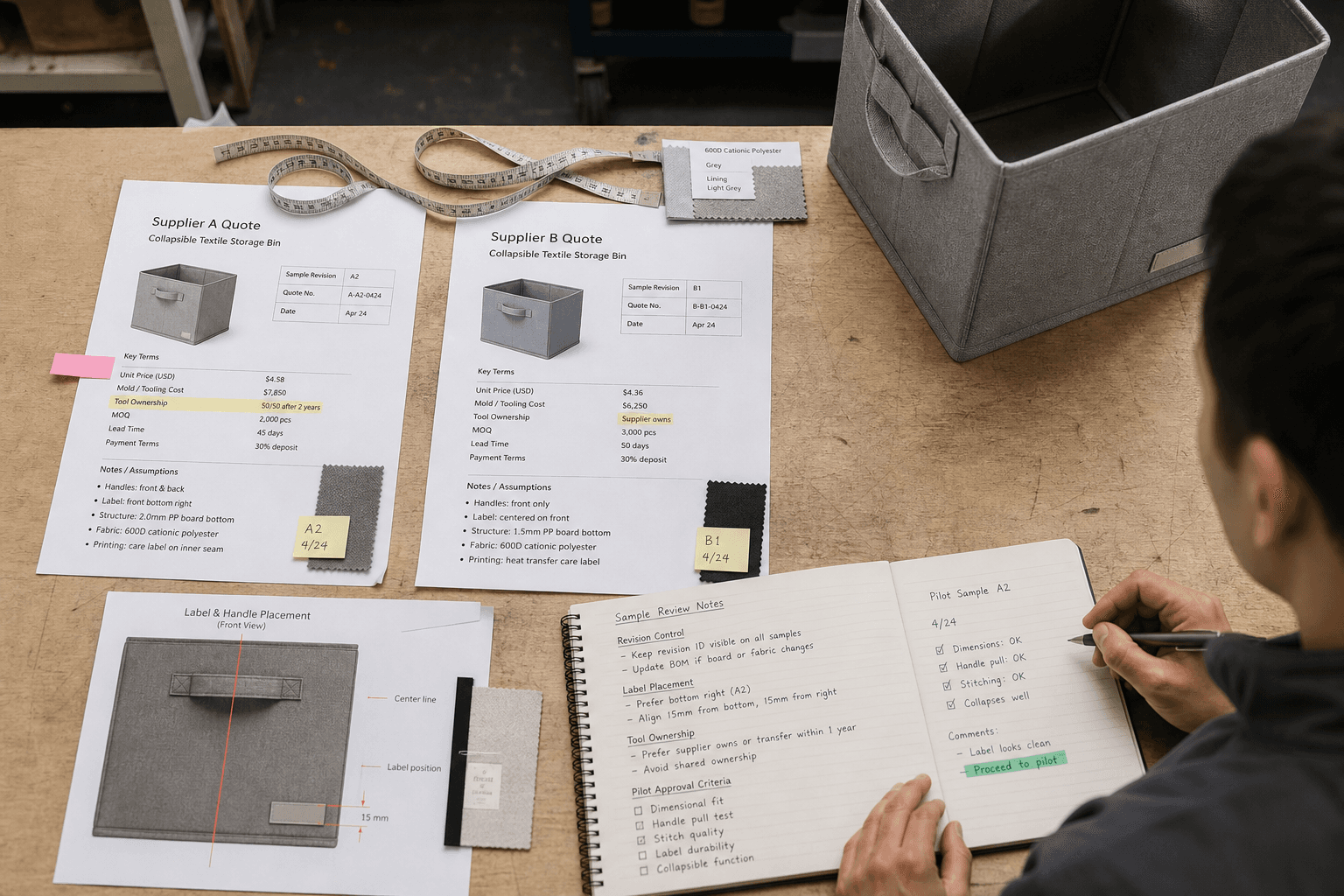
Worked example 2: textile storage bin for US and EU sales
For example, imagine a private-label textile storage bin for children's rooms. The sewn sample looks good. Handles feel fine. Color is acceptable. Everyone wants to move.
The risk is not that the sample is ugly. The risk is that production starts before you settle how the product will carry permanent identification, origin marking, and any required operator information for the markets you plan to sell into.
The next supplier conversation should sound something like this:
"Please show where permanent product identification will appear on the product and packaging. If this item is treated as a children's product in the US, what information can you include for production date and batch? How will country of origin be marked? For EU sales, what product and operator information will appear on the product or packaging where required? Please provide this on the pre-production sample, not after bulk cutting starts."
What changes with the answer?
If the supplier proposes a removable sticker for information that needs to remain with the product in normal use, you've found a problem while it's still cheap. If they can only finalize label placement after cutting bulk material, your sample approval is still incomplete. If they can't explain how batch coding ties back to production records, traceability is not actually in place. It's decorative.
Carry that example one step further with a quote comparison.
Supplier X offers a hypothetical sewing price of $4.20 per unit at 3,000 units and says final label content can be added later once production begins.
Supplier Y offers a hypothetical sewing price of $4.35 per unit at the same quantity and asks you to freeze label artwork and placement before pre-production, then sends a sewn sample showing the exact placement.
The unit-price difference is hypothetical $0.15. Across 3,000 units, that's hypothetical $450.
What does the extra $450 buy? Not guaranteed compliance, and it would be sloppy to claim that. What it does buy is a better-controlled approval stage. The production sample now proves product construction and label execution together, instead of turning labeling into a separate late-stage surprise.
For a first run across more than one market, I would generally choose Y unless the product clearly falls outside the stricter use case and the labeling requirement is genuinely simple. Late label decisions are one of those avoidable problems that somehow manage to consume a whole week.
The tradeoff that changes the recommendation
The recommendation changes when the prototype is materially different from the way the product will really be made.
If the prototype already uses the production material and process, and the remaining questions are mostly commercial, tooling may be the right next step.
If the prototype differs from production in any way that affects fit, finish, safety, assembly, or labeling, the safer recommendation is another iteration or a pilot under production-like conditions. A hand-finished sample does not settle a molded texture. A local sewing sample does not settle bulk reinforcement, label construction, or packaging execution at line speed.
FDA design-control guidance is useful here as a manufacturing principle because pilot production is meant to simulate actual manufacturing conditions before full transfer, not merely to celebrate that the idea survived prototyping [FDA design control guidance PDF]. Different category, same lesson.
What the next supplier call should resolve
Do not end the call with "please proceed with tooling" unless you can settle these points in plain language and in writing:
- the controlling drawing, BOM, packaging, and artwork revisions
- the critical characteristics, tolerances, and measurement methods
- what the tool-off sample must prove
- the pilot quantity and what will be inspected
- the lot-acceptance method for bulk output
- tooling ownership, storage, maintenance, and transfer terms
- the required markings, traceability details, and market-specific information for where you will sell
If your team can manage that directly with factories, fine. If not, the fair comparison is not just direct factory cost versus outside support cost. It's whether you have the time and discipline to qualify suppliers, compare quotes on the same scope, hold the document set together, and stop sample drift before it becomes production drift. Sourcing agent vs buying direct: which route fits your brand? is worth reading before you decide how to run that process.
If you need help turning a prototype into a production-ready spec package, sample plan, and supplier comparison, AnyGoods can support that work through its services or a direct inquiry.
Your next move is not to ask for the best mold price. It's to send the supplier the controlled spec set and ask them to confirm, in writing, what they will make, what they will measure, what they will mark, and what happens if first output misses spec.
Product sourcing brief
Turn a product idea into a brief manufacturers can evaluate. Replace the example with your own requirements.
Send the same version to each shortlisted supplier. Ask them to identify assumptions and exceptions before quoting.
See a completed example
- Product and intended use
- Hypothetical example: An everyday tote for carrying a laptop and groceries. Initial market: United States.
- Specification and references
- Define dimensions, fabric weight, construction, handle length and required performance. Attach a drawing and reference images; identify which details are essential.
- Quantity and target economics
- Request comparable quotes at the quantities you can realistically finance. Specify whether the target is factory price or landed cost.
- Materials and packaging
- List material preferences, hardware, labels, carton requirements and any substantiated product claims. Ask the factory to flag substitutions.
- Samples and acceptance
- Define what the sample must prove: dimensions, construction, comfort and performance. Agree the sample cost, process and review timing.
- Market requirements
- Name the destination market and intended user. Confirm applicable safety, labeling and testing requirements with qualified sources for this product.
- Timing and commercial questions
- Give the desired launch date, ask for milestone estimates, and confirm payment terms, tooling ownership, inspection and change approval.
Make your own brief
Your entries stay in this tab. Download before leaving; they are not saved or sent to AnyGoods.
Sources & further reading
- FDA PMA Quality Systemfda.gov
- ISO 20457:2026 Plastics moulded parts — Tolerances and acceptance conditionsiso.org
- CPSC Tracking Label Business Guidancecpsc.gov
- EUR-Lex GPSR guidanceeur-lex.europa.eu
- NIST on testing conformance to GD&T standardsnist.gov
- CBP Marking of Country of Origin on U.S. Importsltnr.ca
- ASQ Sampling Plan Standards for Quality Controlasq.org
- FDA Design Control Guidance for Medical Device Manufacturersfda.gov
- CBP Rules of Origincbp.gov
Published by AnyGoods Editorial. Examples are illustrative unless a source is identified. Updated .