A supplier says, “Yes, we can customize it,” and suddenly a simple buying decision turns into a small finance problem.
That is usually where teams make the wrong call in the private label vs custom manufacturing debate. They treat every change as equal. It isn’t. A logo on a carton, a different fragrance, a new molded part, and a child-safety change can all be called customization, but they do very different things to MOQ, sample cycles, quality risk, compliance work, and cash tied up before launch.
The useful question is not whether a factory can customize. Nearly all of them can, in some fashion. The useful question is which parts of the product need to be different enough to justify custom development.
My recommendation is simple. Start with private label when your edge comes from brand, merchandising, packaging, bundle design, channel fit, or speed. Move into custom manufacturing when the thing customers are actually buying is a different product: different fit, different performance, different geometry, different material behavior, or tighter control over how it’s made. If the change won’t affect conversion, returns, compliance, or margin in a meaningful way, don’t pay for a custom project because it feels more serious.
Sort the changes by what they do to the project
Before you ask for quotes, split your requested changes into five buckets.
Branding-only changes are the lightest. Think logo print, standard color options already in the supplier’s range, an insert card, or a retail sleeve. Those usually stay in private-label territory.
Packaging and bundle changes come next. A two-pack instead of a single unit, a custom ecommerce carton, or a revised insert can still be private label, but these are not cosmetic in the operational sense. Packaging changes can affect carton count, freight efficiency, net quantity statements, and labeling layout. NIST notes that federal packaging and labeling requirements apply to some commodities, and that Handbook 130’s Uniform Packaging and Labeling Regulation has been adopted in law by many states, which matters if your “easy” packaging refresh changes what has to appear on pack (NIST packaging and labeling FAQs, NIST Handbook 130).
Then there are spec tweaks inside an existing platform. A thicker fabric, a different finish, a revised bottle size, a stronger magnet, another zipper, or a fragrance change might still sit inside the supplier’s normal process. Or they might quietly create a custom material buy, a new failure point, or a revised testing plan. This middle ground is where many expensive misunderstandings begin.
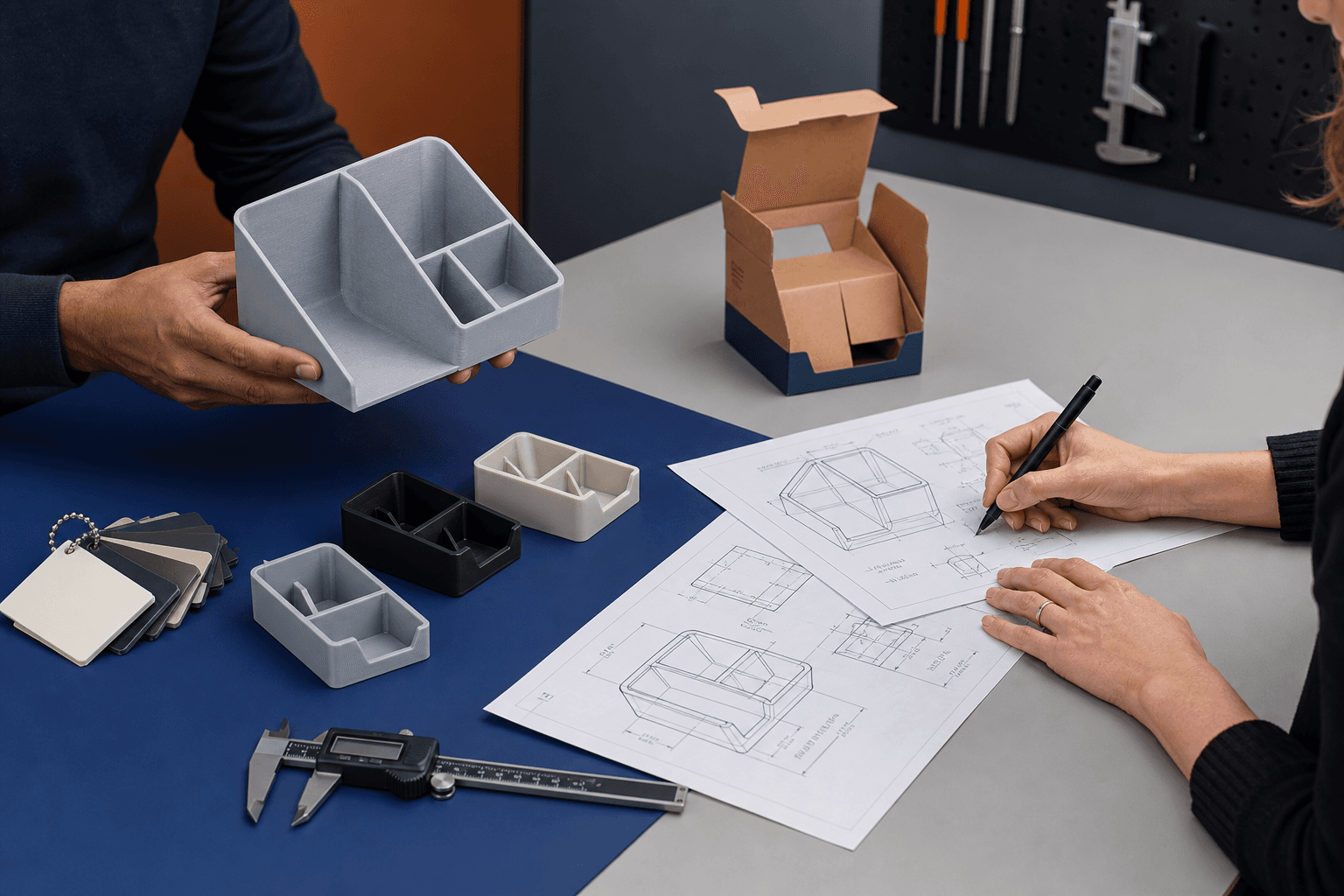
Structural changes are different. New geometry, a different mechanism, a new mold, a custom material construction, or a reworked closure make it a custom project in substance even if the factory started from something it already makes.
Finally, there are compliance-triggering changes. These matter because a standard product does not stay operationally simple just because the base item already exists. For example, children’s products sold in the U.S. must bear tracking label information, and children’s products and some general-use products subject to federal safety rules require certificate documentation under the CPSC framework (CPSC tracking label guidance, CPSC certification and testing guidance). Cosmetics sold in the U.S. have their own labeling requirements, and FDA states it does not pre-approve cosmetic labeling before sale (FDA cosmetics labeling summary, FDA on cosmetic label pre-approval).
That sorting exercise does more than tidy your notes. It tells you where the project stops being a light modification and starts becoming a development program.
Read the video transcript
You’re trying to launch a product, then one supplier says customization is easy and suddenly a straightforward order becomes a riskier cash and timing decision. A new logo, a bundle, a fragrance, or a molded part can all sound similar, but they affect cost, samples, quality, and compliance very differently. If customers mainly notice your brand, packaging, speed, or channel fit, private label often makes sense because you avoid development work that may not change sales. Imagine a home accessory sold as a two-pack with two colorways, a sleeve, and an insert; that likely stays private label unless tooling or special materials appear. Next, ask which requests stay on the current line, which trigger tooling or minimum buys, and whether packaging changes alter carton counts or labeling needs. Custom earns its trouble when the product itself must work differently, but don’t mistake nicer terms or a prettier idea for proof customers will value it.
Use the same criteria for both routes
If you compare private label on speed and custom on uniqueness, custom will always sound more glamorous. That is not the same as being the right buying decision this week.
Compare both routes against the same criteria:
| Criteria | Private label | Custom manufacturing |
|---|---|---|
| Specification fit | Best when an existing product is already close | Best when the required differences are functional or structural |
| Landed cost | Lower development spend upfront; unit economics may level off | Higher upfront spend; redesign may improve unit or freight economics later |
| MOQ | Often lower, but packaging and materials can still push it up | Often higher when tooling, dedicated materials, or custom components are involved |
| Quality risk | Lower if the platform is already proven | Higher at first because the process is still being established |
| Internal workload | Lower sample and engineering burden | More work across drawings, approvals, revisions, and change control |
| Lead time | Usually faster to launch | Usually longer because tooling and validation add steps |
| Cash exposure | Less money tied up before first sellable units ship | More money committed earlier, often before final confidence exists |
These are directional, not universal. There is no honest blanket MOQ or lead-time number that applies across categories. Material minimums, print methods, packaging, and supplier capability change the answer quickly.
Example 1: a home accessory that should probably stay private label
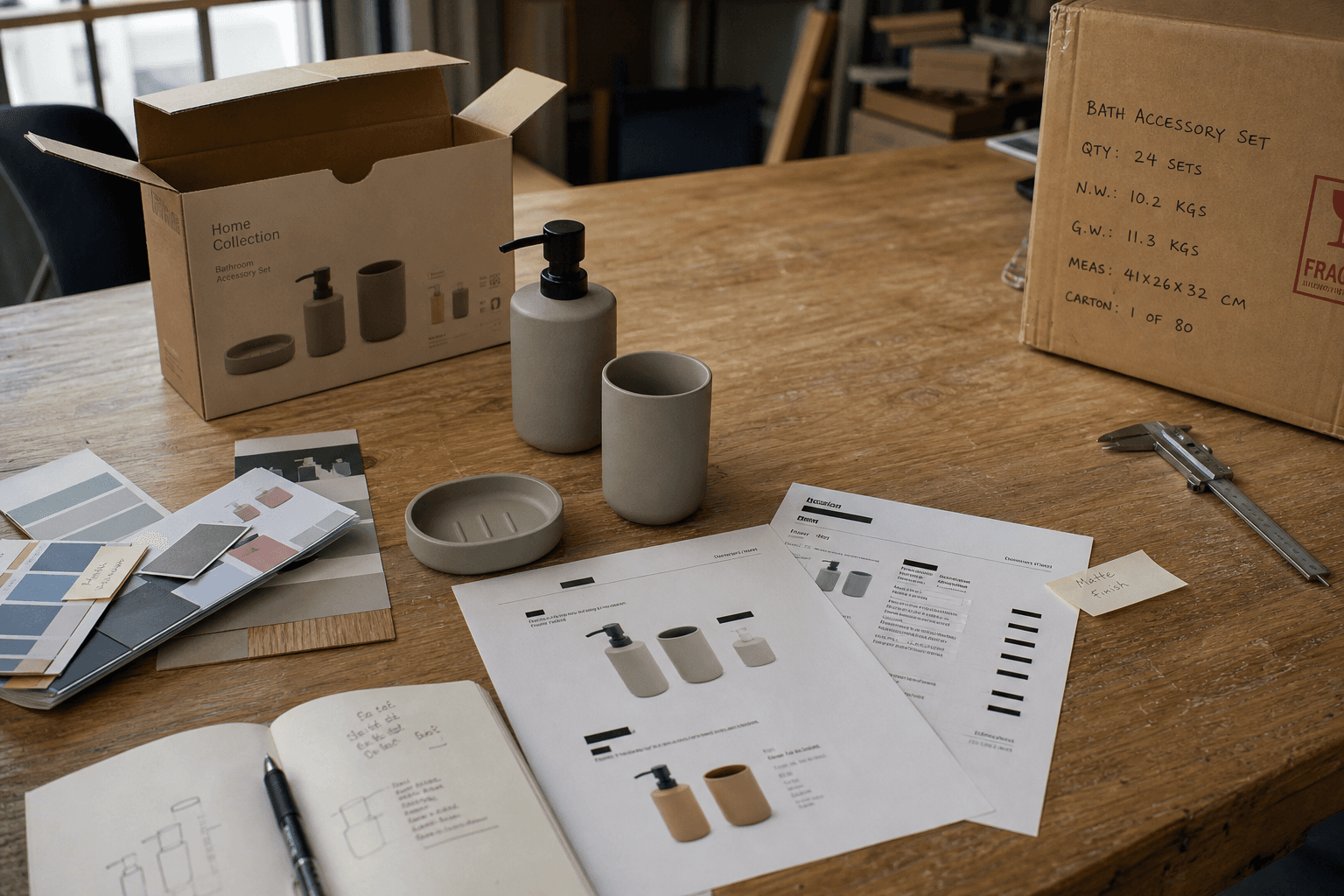
Say you sell home organization products and want to launch a bathroom storage accessory. You have found three suppliers that already make a very similar base item.
Your requested changes are modest:
- two colorways
- a branded sleeve
- an instruction insert
- a pack of two instead of one
- an outer carton sized for parcel shipping
That sounds ordinary because it is. It should also make you suspicious of anyone trying to sell you a heroic development project.
On paper, this still fits a private-label route unless one of those changes forces new tooling or non-standard component buying.
The next supplier conversation should resolve the boundary between standard and custom. Ask questions that produce a usable quote, not comforting noise.
Start here:
- “Are these colorways from your existing finish library, or do they require a custom match and a minimum material purchase?”
- “If we switch from a single pack to a two-pack, what changes in unit packing time, master carton quantity, and carton dimensions?”
- “Which packaging elements are standard for you, and which require a new dieline or setup charge?”
- “Can you send a stock sample first, then a packaging mockup, before we pay for a pre-production sample?”
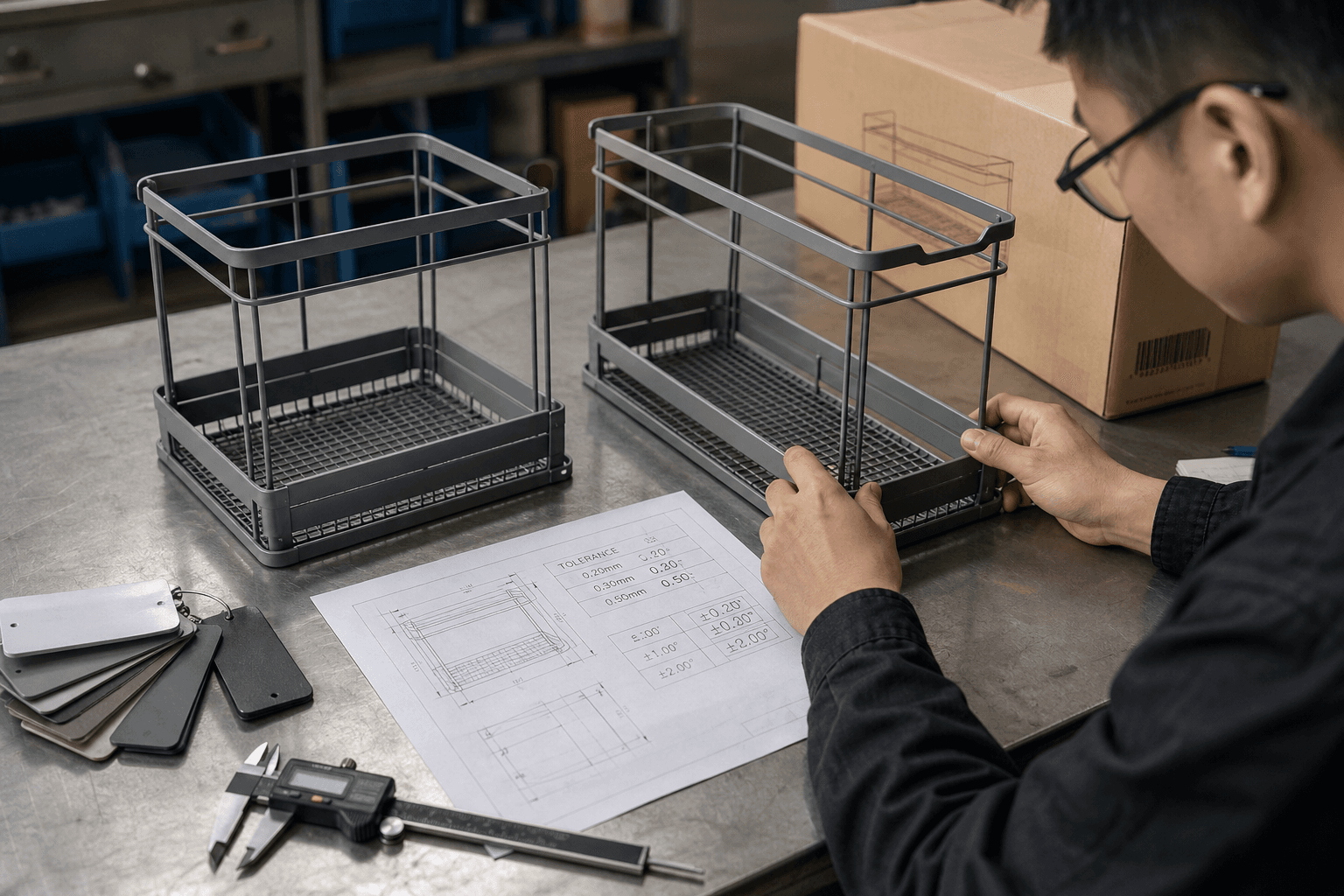
- “What tolerances do you hold on the mounting points and overall dimensions of the current platform?”
Now run the numbers. The following example is hypothetical and only meant to show the decision.
Option A stays private label:
- Factory price: $3.20 per unit
- Packaging upcharge: $0.35 per unit
- Freight and import costs: $0.95 per unit
- Total landed cost: $3.20 + $0.35 + $0.95 = $4.50 per unit
- MOQ: 2,000 units
- Cash due on product before shipment, excluding freight deposits or testing: 2,000 × ($3.20 + $0.35) = $7,100
Option B adds a custom molded mounting clip because the team wants a cleaner look:
- Factory price: $3.55 per unit
- Packaging upcharge: $0.35 per unit
- Freight and import costs: $0.97 per unit
- Tooling charge: $2,800 one time
- Landed cost before tooling allocation: $3.55 + $0.35 + $0.97 = $4.87 per unit
- If you spread tooling over the first 2,000 units for your internal decision, effective first-run landed cost: $4.87 + ($2,800 / 2,000) = $6.27 per unit
The relevant question is not whether the custom clip is nice. Of course it is nice. The relevant question is whether it will justify roughly $1.77 more per unit on the first run under these assumptions.
If you don’t have a strong reason to believe it will improve sell-through, support a higher price, or cut returns, launch on the standard platform first.
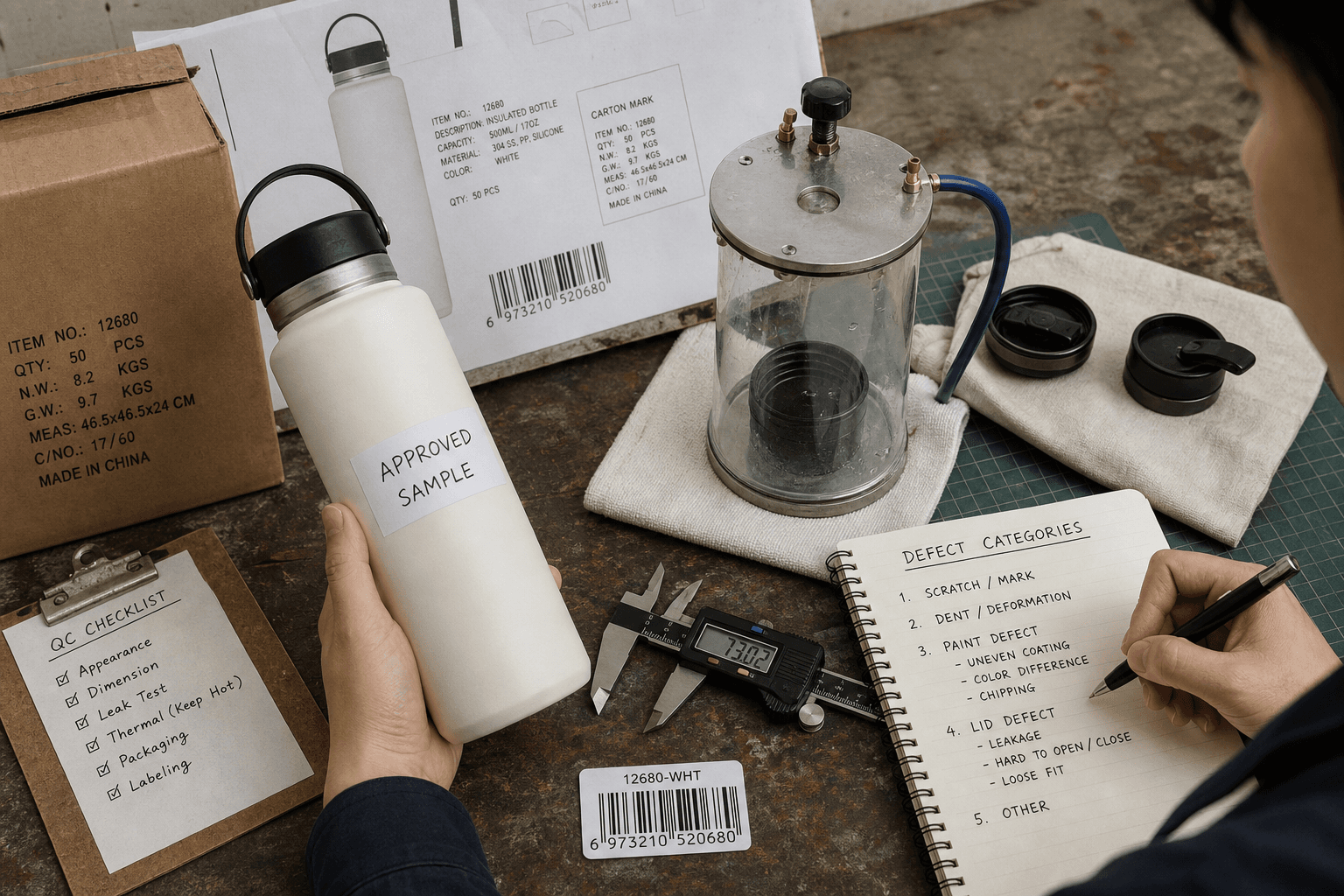
The sample test here is simple and worth doing. Install ten units from the stock sample. Inspect whether the mounting points line up consistently, whether the finish gets marked during ordinary handling, and whether the two-pack carton arrives intact after the parcel route you actually plan to use. If the stock platform already has dimensional variation that causes installation headaches, that finding changes the decision. You may need a different supplier or tighter controls before you spend money on custom details that no one will notice once the bathroom cabinet door is closed.
Example 2: a children’s product that has crossed into custom
Now take a different case. Imagine a children’s storage item where your sales angle depends on a safer, easier closure. You want a revised size, a new molded component, and a different material because standard market options create a usability problem.
This is where teams get into trouble by calling it “private label with a few tweaks.” It isn’t.
The thing that needs to be different is functional. Once the offer depends on new geometry and a new molded part, you are in custom manufacturing whether you enjoy that fact or not.
Your supplier questions need to become more exact:
- “Does this closure require a new mold, a modification to an existing mold, or only a fixture change?”
- “Who owns the mold, where is it stored, who pays maintenance, and can the part be produced elsewhere later?”
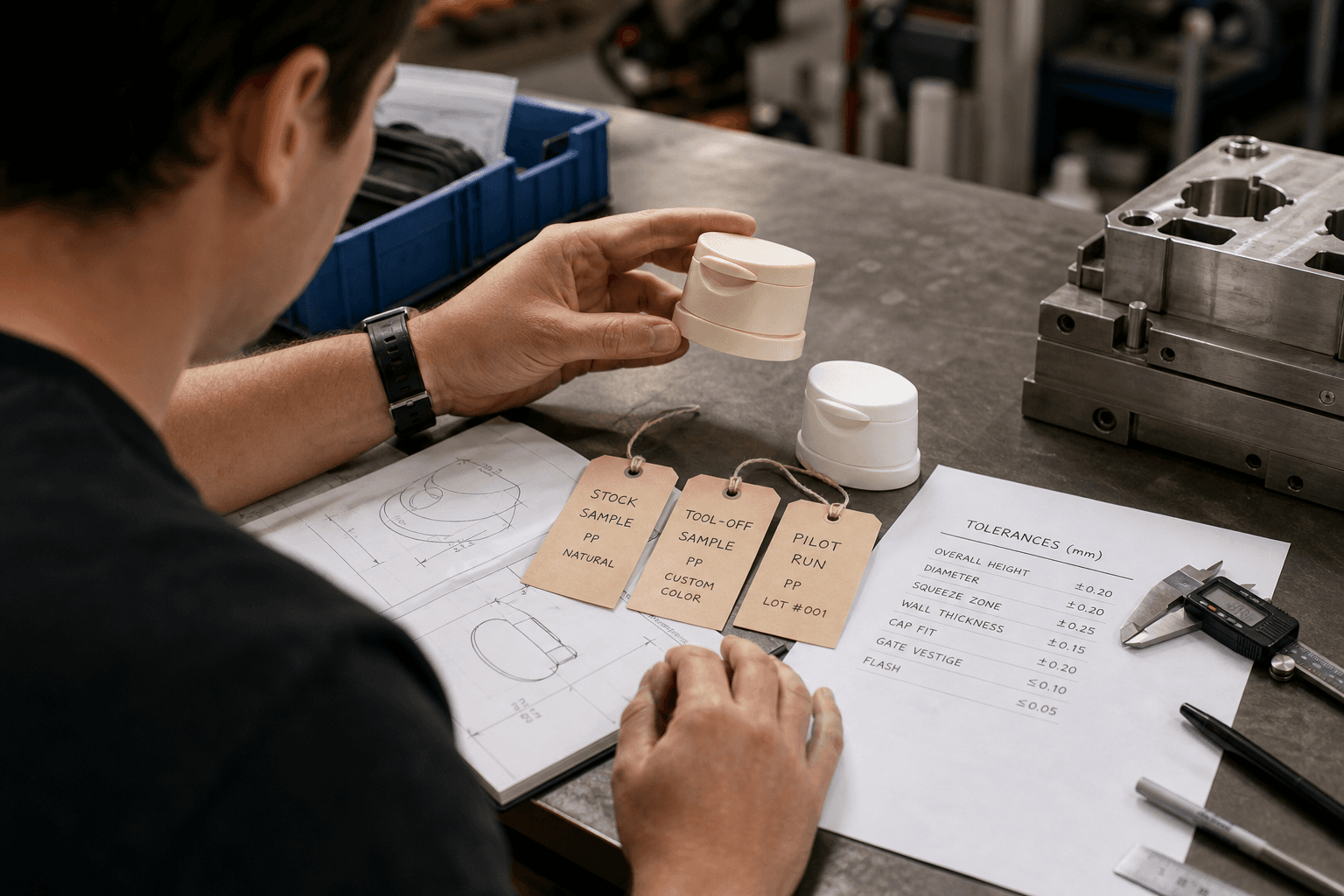
- “What is the sample sequence for this exact change: concept sample, tool-off sample, pre-production sample, pilot run?”
- “What dimensions and force tolerances can you hold repeatedly at production scale?”
- “Which components become custom-only rather than stock parts?”
- “For the final product configuration and sales market, what labels, tests, and certificates apply, and what remains the importer’s responsibility?”
That last question is not bureaucratic theater. For children’s products sold in the U.S., CPSC guidance requires tracking information, and certificate obligations depend on the federal rules that apply to the final product, not just the factory’s nearest stock cousin (CPSC tracking label guidance, CPSC labeling overview). In other words, a factory saying “we’ve made something similar before” is comforting but not sufficient.
This example also shows a cost issue buyers often miss. U.S. Customs and Border Protection states that declared value can include, where applicable, assists, royalties, packing, and production costs (CBP invoice value guidance). CBP’s compliance publication explains that tools, dies, molds, and certain non-U.S. engineering, development, artwork, design work, plans, and sketches necessary for production can count as assists (CBP assist guidance). A CBP ruling also shows how non-U.S. design and development work can be analyzed and apportioned in customs valuation (CBP ruling H299185).
That does not mean every design fee becomes dutiable in every transaction. It does mean your factory quote may not be the whole landed-cost story.
Here is a hypothetical version of the math:
- Unit price: $5.80
- Packaging: $0.40 per unit
- Freight and import costs: $1.30 per unit
- Tooling: $4,500 paid separately
- Initial order: 3,000 units
Basic landed cost before tooling allocation is $5.80 + $0.40 + $1.30 = $7.50 per unit.
If you spread tooling across the first 3,000 units for internal decision-making, the effective first-run landed cost becomes $7.50 + ($4,500 / 3,000) = $9.00 per unit.
That internal cost allocation is not a customs ruling. It is decision math. The customs treatment of tooling or buyer-funded design work depends on the facts and documentation. But it changes your next move right now: ask your customs broker what must be documented and whether any buyer-funded tooling or production design work may affect declared value before you approve the run.
This is also a case where your sample approval process should be stricter than “looks good.” For the closure, inspect whether the molded part fits consistently across multiple pieces, whether the mechanism works after repeated use, and whether the final labeled sample reflects the configuration you will actually import. If the tool-off sample works but the pilot run starts drifting on fit, that changes the decision. You may need to slow down and correct the process before you commit inventory cash to something that will become a return problem in a matter of weeks.
Where buyers underrate private label
Private label gets dismissed as generic when it is often just disciplined sequencing.
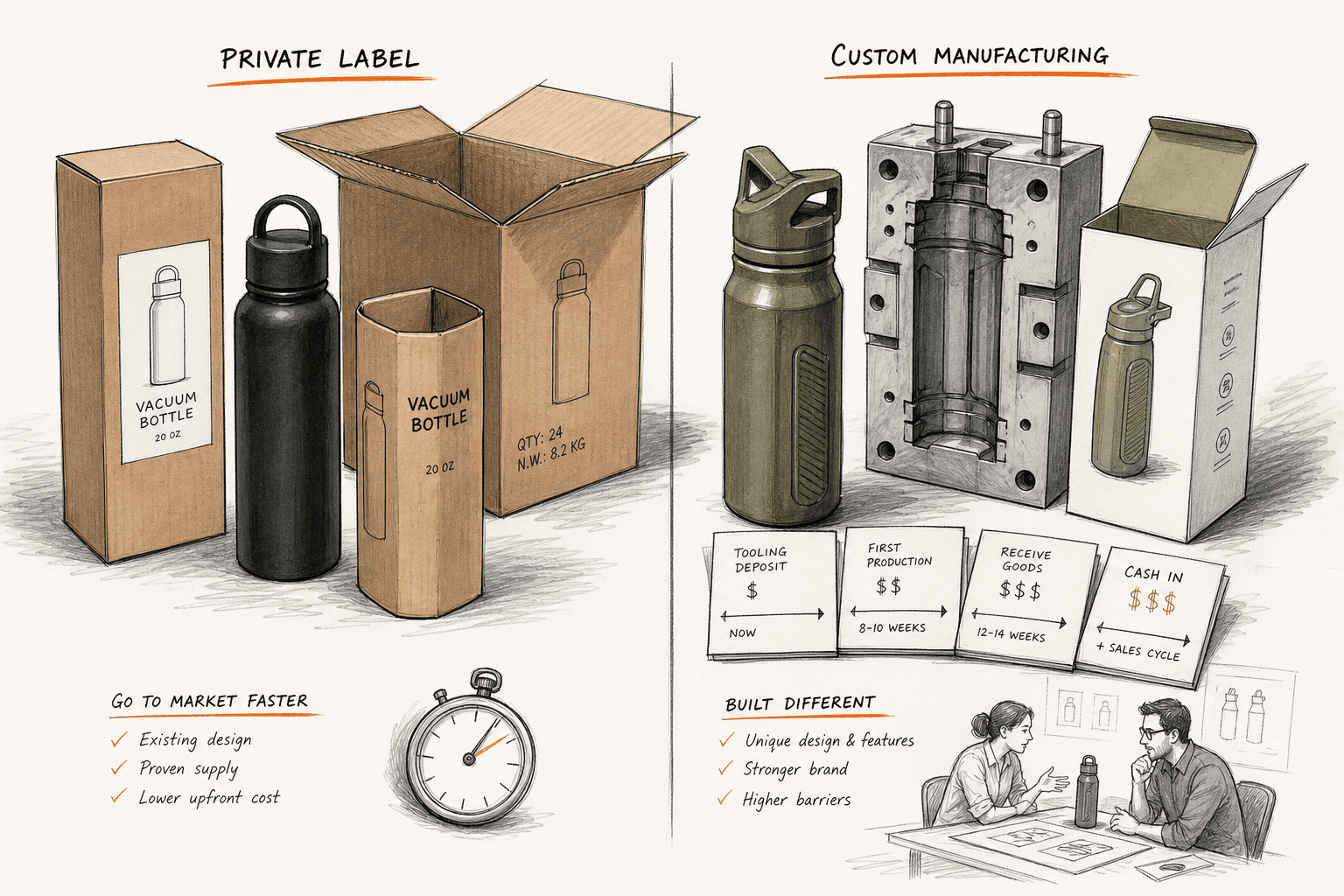
If your advantage comes from brand trust, positioning, visual presentation, bundle logic, channel execution, or speed to market, a proven product platform is often the right first move. It lets you test demand without paying for every kind of risk at once. You learn whether the category works for you before you add tooling, validation rounds, and custom component headaches.
It also gives you better evidence for later custom work. Once you know the real complaints, return reasons, and feature gaps, you can write a sharper custom brief. That is when custom starts earning its keep, because you are paying to fix something specific rather than paying for novelty out of nerves.
Where custom is worth the trouble
Custom manufacturing deserves the burden when the difference customers pay for is functional, when a redesign may materially improve unit or freight economics, or when the product needs tighter control than a standard platform can reliably hold.
There is one more point worth settling early. Shipping terms do not answer the product-development question. Trade.gov explains that Incoterms allocate responsibilities, costs, and risks for shipping and customs formalities, but they do not settle all conditions of sale or product conformity obligations (Trade.gov on Incoterms). So an EXW quote on a complicated custom item is still a complicated custom item. Nice freight terms do not turn engineering risk into a packaging decision.
Origin claims deserve the same caution. If part of your plan is domestic assembly or repacking after import, that does not automatically support an unqualified Made in USA claim. The FTC requires substantiation and applies an “all or virtually all” standard for those claims (FTC Made in USA Rule, FTC compliance guidance). Marketing departments are, regrettably, not customs authorities.
What to resolve in the next supplier conversation
Do not ask, “Can you customize this?” Ask where the project stops being standard.
A useful sequence is:
- Which requested changes can you make on your current production line without new tooling?
- Which changes trigger mold, die, fixture, or minimum material costs?
- Which components move from stock to custom-only?
- What sample stages do we need for these exact changes?
- What tolerances can you hold at scale on the final version?
- Which packaging elements are standard and which require new setup?
- What buyer-supplied files, artwork, or engineering inputs are required for production?
- Could buyer-funded tooling or non-U.S. production design work affect customs valuation?
- For the final product and market, what labels, tests, and certificates apply?
- What changes on reorders, not just the first run?
If you are comparing an existing-product route against a semi-custom or fully custom brief and need the quotes, samples, and ownership terms structured cleanly, AnyGoods can help through its services or you can start the conversation at contact.
Your next move is to mark every requested difference as branding, packaging, spec tweak, structural change, or compliance-triggering change, then ask suppliers to quote where the handoff from standard to custom actually happens. That line, not the sales pitch, should decide the route.
Product sourcing brief
Turn a product idea into a brief manufacturers can evaluate. Replace the example with your own requirements.
Send the same version to each shortlisted supplier. Ask them to identify assumptions and exceptions before quoting.
See a completed example
- Product and intended use
- Hypothetical example: An everyday tote for carrying a laptop and groceries. Initial market: United States.
- Specification and references
- Define dimensions, fabric weight, construction, handle length and required performance. Attach a drawing and reference images; identify which details are essential.
- Quantity and target economics
- Request comparable quotes at the quantities you can realistically finance. Specify whether the target is factory price or landed cost.
- Materials and packaging
- List material preferences, hardware, labels, carton requirements and any substantiated product claims. Ask the factory to flag substitutions.
- Samples and acceptance
- Define what the sample must prove: dimensions, construction, comfort and performance. Agree the sample cost, process and review timing.
- Market requirements
- Name the destination market and intended user. Confirm applicable safety, labeling and testing requirements with qualified sources for this product.
- Timing and commercial questions
- Give the desired launch date, ask for milestone estimates, and confirm payment terms, tooling ownership, inspection and change approval.
Make your own brief
Your entries stay in this tab. Download before leaving; they are not saved or sent to AnyGoods.
Sources & further reading
- NIST packaging and labeling FAQsnist.gov
- NIST Handbook 130nist.gov
- CPSC tracking label guidancecpsc.gov
- CPSC certification and testing guidancecpsc.gov
- FDA cosmetics labeling summaryfda.gov
- FDA on cosmetic label pre-approvalfda.gov
- CPSC labeling requirements overviewcpsc.gov
- CBP invoice value guidancehelp.cbp.gov
- CBP assist guidance PDFcbp.gov
- CBP ruling H299185rulings.cbp.gov
- Trade.gov Incoterms guidancetrade.gov
- FTC Made in USA Ruleftc.gov
- FTC compliance guidanceftc.gov
Published by AnyGoods Editorial. Examples are illustrative unless a source is identified. Updated .